BEIJING, Jan. 1 (Reporter Zhang Aolin) With the ringing of the New Year bell, people all over the world are expecting the new year to bring hope and a turn for the better, and so is the international situation. Looking back on 2024, the Ukrainian crisis reached a deadlock, the Middle East became a mess, Trump won the US election, and Yin Xiyue was impeached because of martial law … These events undoubtedly had a far-reaching impact on the global political and economic structure.
In the face of the turbulent international situation, can chaos be stopped in 2025? Or add chaos to chaos? Zhongxin. com invited Cui Hongjian, director of the EU and Regional Development Research Center of Beijing Foreign Studies University, and Li Haidong, a professor at Foreign Affairs University, to make a forward-looking interpretation.
Data map: Ukrainian artillery units on the Russian-Ukrainian front.
Crossroads: Will Russia and Ukraine hold peace talks?
-Both sides are already tired.
At the beginning of the new year, the tension between Russia and Ukraine continued on the vast plains of Eastern Europe, and the Ukrainian crisis entered its third year.
For Russia and Ukraine, it seems that they have entered a period of fatigue.
Russian President Vladimir Putin said in the "annual inventory" in 2024 that Russia has always been willing to negotiate. A few days later, Ukrainian President Zelensky made a Christmas speech, and also mentioned "wanting peace".
The two sides throw olive branches at each other, and the dawn of peace is close at hand?
Cui Hongjian believes that at present, there is a consensus among all parties in the Ukrainian crisis that the current situation is difficult to sustain, and it has shifted from fighting to seeking a political solution. This is a major change.
Although the Russian-Ukrainian front is still under constant fire, in the past year, neither side has made any substantial breakthrough on the front. In Cui Hongjian’s view, the two sides are close to the "ceiling" in the use of military means, and it is unlikely that there will be qualitative changes.
As for foreign media analysis that Russia may use nuclear weapons in a critical situation, Cui Hongjian believes that this will trigger a "qualitative change" in the Ukrainian crisis, but it is unlikely that Russia will do so. On the one hand, Russia has scruples, and on the other hand, the international community is under great pressure. At present, Russia mainly relies on hypersonic missiles to maintain its battlefield advantage.
-The first half of the year is crucial.
Cui Hongjian said that there are several key variables worthy of attention in the first half of 2025. First, after Trump takes office on January 20, the US policy toward Ukraine will be clear, which will affect the countermeasures of all parties.
During Trump’s campaign, he played the "Russian-Ukrainian ceasefire card" and repeatedly shouted that "the Ukrainian crisis will be resolved within 24 hours after taking office", and the whole world is waiting to see the results.
At the same time, major European countries such as France and Germany are also facing political changes in the first half of 2025. Due to the different positions and goals of Europe and the United States, Trump intends to adjust his foreign policy. He believes that long-term conflicts will consume American resources and make policies deviate from the core.
Cui Hongjian analyzed that although Europe is politically inclined to Biden’s government policy, if Trump lets the United States withdraw its support for Ukraine, it will become more and more difficult for Europe to continue to aid Ukraine, and whether it can follow the changes in US policy will become a key variable.
Data map: Trump.
Eye of the Storm: How chaotic will Trump be when he comes to power?
-tariff war
Threatening to "take back" the Panama Canal, "take over" Greenland, and implying that Canada and Mexico are included in the US territory … Trump has not officially taken office as the US president, but his series of remarks and policy intentions have caused an uproar around the world.
In Li Haidong’s view, Trump’s coming to power is likely to become a new trigger for global turmoil, and a storm covering many fields may sweep through, and the economic and trade fields may bear the brunt.
In November 2024, Trump suddenly announced that he would impose tariffs on Canadian, Mexican and China after he took office. Some American media analysts said that this might just be the prelude to Trump’s long-simmering "tariff war".
Li Haidong also gave a similar view: after Trump took office, the global trade pattern will be reshaped, and it will shift from the previous liberal or globalist trade agenda to a conservative trade agenda centered on the United States.
At the same time, Li Haidong pointed out that Trump can be expected to promote a grand tariff war plan for all countries in the world, so as to achieve a situation that "all countries in the world contribute to the United States at the economic level, instead of the United States contributing to other countries".
-"Internalization" policy
In his first term, Trump withdrew from the group at intervals and collected "protection fees" from his allies, which made the outside world worry that the foreign policy during the "Trump 2.0" period might be more isolationist.
"Geopolitical games and competitions are not Trump’s concern, and the relationship between big countries at the geopolitical level will enter a period of in-depth adjustment." Li Haidong said, "There is great uncertainty whether to make the relationship between big powers smoother or intensify confrontation, which is closely related to the unpredictability of Trump’s foreign behavior."
After Trump won the election, Japanese Prime Minister Shi Pomao quickly called to congratulate him, but the call lasted only five minutes, showing his alienation from Japan. Similarly, the meeting between Trump and Zelensky lacked enthusiasm and the interaction was cold.
Li Haidong pointed out that Trump’s administration is characterized by "introversion", which regards allies as a burden rather than an asset, thus leading to estrangement from allies. The United States may also oppress allies to make concessions, which makes allies stay away from him, aggravating global decentralization, eccentricity and uncertainty.
"Trump’s policies may lead to more chaos in the world and may also make the world more dangerous, so the world under Trump’s administration will be full of uncertainty." Li Haidong thinks.
Data Map: On October 27, 2024, Israel launched an air strike on the southern suburbs of Beirut, the capital of Lebanon, and smoke billowed from the scene.
War clouds are gathering: the powder keg in the Middle East is out of control?
With five days left in 2024, the door to peace between Israel and Hamas was closed again, and both sides accused each other of sabotaging the negotiations.
This conflict, which has been delayed for nearly one year and three months, has a difficult road ahead. In 2024, more than 40,000 lives will be lost. "Now it seems that the conflict between Israel and Hamas is only a symptom of the deep-seated contradictions in the Middle East, not the root cause." Li Haidong analyzed.
Li Haidong pointed out that "Israel and Iran, Arab countries and Iran, and the United States and Iran, all these relations are highly antagonistic, which also means that the conflict between Israel and Hamas, even if it eases later, will never stop. Once the external environmental conditions are ripe, the conflict will inevitably happen again."
In 2024, the uncertainty in the Middle East was "visualized".
On the day when the ceasefire talks in Gaza broke down, a hypersonic ballistic missile launched by Houthi forces successfully hit Israeli military targets, and this missile happened to be a "Palestinian -2" type.
In addition to beating Hamas almost out of combat effectiveness, Israel conveniently "crippled" Hezbollah in Lebanon. After the sudden collapse of Bashar regime in Syria, the Israeli army launched air raids on the country and bombed several Syrian naval vessels, which made the already chaotic situation in the Middle East completely out of control.
Li Haidong analyzed that Israel’s strategic intention is to strengthen its security position in the Middle East and bind American policy with its own interests. This has expanded Israel’s "living space" and made American diplomatic strategy more inclined to support Israel, making it difficult to get out, and the Middle East may be more turbulent in the next few years.
For Syria, which has just fallen into chaos, Li Haidong said that further observation is needed. Because of the support behind the leaders of the new Syrian regime, it is uncertain how to straighten out the relationship with different religious factions in China.
Data map: Yin Xiyue.
Waves on the Peninsula: Is the political situation in South Korea stable?
On the Korean peninsula at the eastern end of the Eurasian continent, the dramatic martial law imposed by South Korean President Yin Xiyue in early December 2024 triggered a political earthquake, and the contradiction between the DPRK and the ROK further intensified.
After Yin Xiyue was impeached and suspended, she thought that South Korea’s political arena would be temporarily stable. As a result, when the New Year approached, the acting president’s Prime Minister Han Dezhu was also impeached, and South Korea seemed to be caught in an infinite cycle of "impeachment game". According to the plan, the Korean Constitutional Court will decide the impeachment case within 180 days, and if it is passed, a general election will be held within 60 days.
Regarding whether South Korea can make a smooth transition to the general election, Cui Hongjian believes that "the mainstream of Korean politics wants to avoid more accidents, which means that they must be legal and compliant when solving problems. This is a big test."
Cui Hongjian also pointed out that South Korea’s "political earthquake" not only affected itself, but in the past two years, the United States, Japan and South Korea have been constantly moving on peripheral security issues, and the situation on the Korean Peninsula is in a period of relatively high risk. If South Korea cannot effectively deal with it, it may lead to risk spillover and worsen the situation on the Korean Peninsula.
At the same time, Cui Hongjian believes that the attitude of the United States on the peninsula issue cannot be ignored. "After Trump takes office, factors from the United States may be conducive to the stability of the situation in the DPRK and the ROK, because he may not be keen on political disputes and peninsula security issues."
Dawn of peace: will a new rebalancing stage begin?
Not long ago, some netizens took out Michael Jackson’s "We Are the World" and teased: "Is today’s world worthy of this song?" It is a metaphor for 2024 when conflicts and contradictions continue to intensify.
Cui Hongjian is optimistic about whether 2025 can become the year of reconciliation: "2025 is likely to usher in an opportunity, because the main contradictions in the international community have basically emerged, and all parties have found that they have struggled for several years and have not achieved their goals, and their interests are still losing."
Cui Hongjian further pointed out that "a new rebalancing stage may be opened in 2025, including new political structure, development, military security, etc. The key is that once there is a window of opportunity, it cannot be let go."
How to seize the opportunity, Cui Hongjian gave three key points:
First, we should make full use of the coordination mechanism of major powers, return the relations between major powers to the track of mutual trust and communication, and solve specific problems such as economy, trade and regional security through benign interaction;
Secondly, while the effectiveness of traditional multilateral mechanisms such as the United Nations and WTO is weakened, we should make full use of emerging multilateral mechanisms and platforms such as G20 and BRICS countries to promote global governance.
The third point is whether the reform of the multilateral mechanism can be incorporated into the emerging forces such as the global South. In the eyes of some western countries, the global South is a game stage for big countries, and its power is scattered. Integrating the countries of the global South has become a key force, which is crucial for easing the international situation in 2025 and beyond. (End)
With the upgrading of consumption and the explosive development of Yan value economy, it provides a huge development space for domestic cosmetics. There is a niche make-up brand bibididi, which has just been listed and made a name for itself among a new generation of consumers. Different from Hua Xizi’s "national style" and the "international style" of perfect diary, bibididi focuses on "tide culture", which is a kind of life and attitude, and "makeup" is different.
Bibididi is a brand launched by Jida Bio, a subsidiary of Einis Holding Group. Bibididi, backed by China No.1 Beauty School, started with millions of students in the beauty industry. At the beginning of the brand establishment, Zuo Qingsong, the founder, hoped to break through the homogenization characteristics of existing makeup products and make makeup products that can truly establish emotional connection and spiritual resonance with users. As a fan of fashion brand culture, Zuo Qingsong draws inspiration from the fashion brand colors of skateboards and costumes, as well as the street culture of the United States and Japan, and combines the cutting-edge fashion he has touched with his years of experience in T-stage to create a brand image of makeup with ins playfulness and fashion brand aesthetics, creating the only makeup family bibididi who defines fashion brand in the industry.
As the founder of China Chaopai make-up culture, bibididi insists that "Chao" is not a niche, but a maverick under different circumstances, which enables young people to highlight their unique self and dare to try unique and fresh things. By creating high-quality and personalized fashion brand makeup products, and expressing real ideas through makeup colors and splicing, every urban hipster girl can find her own confident makeup, face it positively and look for the beauty of another life.
For example, the explosion of bibididi misty secret lipstick, the color number is the international brand: #01 forbidden fruit, the standard Dior 999 matte; #02 blasphemy, against Chanel 58; #03 Love Sinus, against Lancome 196; #04 Indifference, benchmarking Givenchy 307; #5 lust, benchmarking Givenchy 306; #6 Fantasy, benchmark YSL10.
Not only the color number, but also the quality is benchmarking and even surpassing international brands. Jida Bio has joined hands with 10 masters of the beauty industry in the world for research and development, and joined hands with Inteli Group in Milan, Italy and Kosmeishi in Korea as suppliers and producers of "bibididi", so that bibididi makeup has the professional and high-quality characteristics of high color rendering, saturated color and lasting makeup. #01 Forbidden Fruit Lipstick is silky to the touch, and the upper lip is smooth without lip lines, which not only has the matte feeling of Dior 999 high-grade velvet, but also improves the dry feeling and easy peeling of 999, and has super high cost performance.
The picture shows Yingteli Technology (Suzhou Industrial Park) Co., Ltd. located in Hualing Street, Suzhou Industrial Park.
In addition to lipstick, bibididi also includes a wealth of products such as cream, concealer, foundation (air cushion), loose powder (honey powder), eyebrow pencil, eye shadow tray, eyeliner, mascara, blush, and volume repair.
It can be said that bibididi has various advantages such as face value, practicality and high cost performance. The quality is not lost to international big brands, but the unit price is 1/2 or even 1/3 of that of big brands, which truly makes the niche high-end brands close to the people and popular. This is also bibididi’s business philosophy, so that more than 90% of the new generation of consumers can afford the domestic brand-name cosmetics with international big-name quality, and let the domestic cosmetics go global.
As for street brands, experts believe that street brands may be an interesting category in consumption upgrading, which is different from luxury brands and standardized mass brands. Most consumers in this field are young people who were born around 90-95 and have a monthly disposable income of 3,000-7,000 yuan. They are newly emerging consumers, and the uniqueness, design sense, cultural magnetic field and other things with sharp standards are the main factors that attract them. To some extent, they are also the power source of the rise of new brands-they dare to try new things and are willing to pay a premium for high value-added products, but their brand loyalty is not high and they switch quickly.
However, bibididi’s brand ideas, such as youth, fashion, avant-garde, individuality, maverick, mix and match, non-mainstream and originality, have cut through the characteristics that new consumer groups generally flaunt as "different" and become the circle logo and cultural symbol for young people to find identity. According to Tmall data, bibididi lipstick has a maximum monthly sales of 1 million pieces, with a repurchase rate of 65%. Experts predict that bibididi Fashion Makeup, as an emerging force, will gradually release huge commercial value and rise to become the biggest dark horse in the domestic makeup industry.
When buying a new energy vehicle, what is the most important thing? Battery life? Intelligent? Configuration? These are of course very important, but what is more important is safety and quality.
With the technological development of new energy vehicles, both battery life and energy efficiency have been greatly improved. Therefore, today’s battery life anxiety is no longer the biggest anxiety of electric vehicle users, but the biggest anxiety is "safety anxiety".
According to the latest data released by the emergency management department, the spontaneous combustion rate of new energy vehicles rose by 32% in the first quarter of last year alone, and an average of 8 new energy vehicles caught fire (including spontaneous combustion) every day. It can be seen that since the popularization of new energy, there have been endless news about spontaneous combustion and other safety accidents. Because of this, consumers will be more concerned about the safety of new energy vehicles.
So, in the face of users’ safety anxiety about new energy vehicles, how should car companies solve the problem? As a "national team player", Hongqi’s approach can be described as "simple and crude" and highly credible. That is, through various extreme challenges, the safety performance of new energy vehicles in extreme environments has been fully verified.
Without fear of "wind, rain, thunder and lightning" and "fire", Hongqi EH7 sets a safety standard
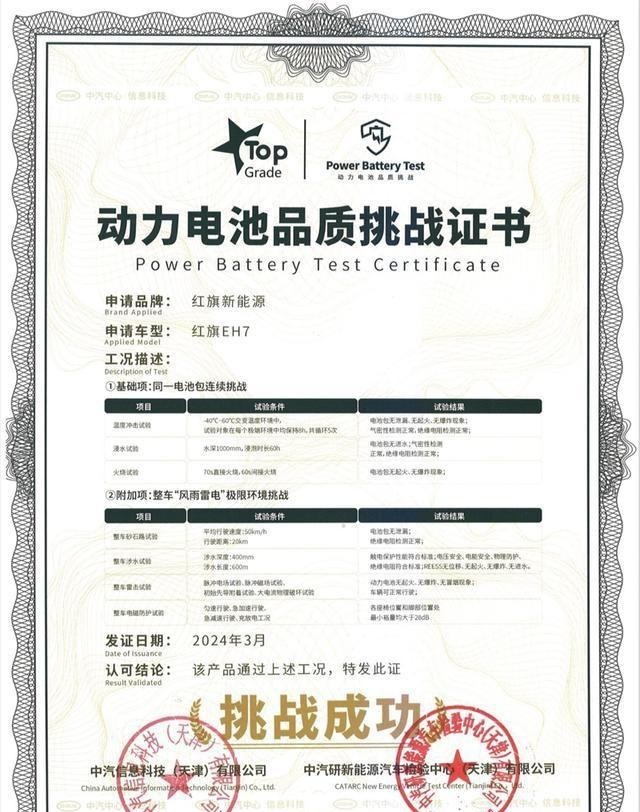
In order to allay users’ anxiety about the safety and quality of new energy cars, as the first pure electric car based on the FMEs super architecture of the Hongqi brand, the Hongqi EH7 has successfully passed the "wind and rain" power-free limit challenge.
In this challenge, in order to verify the safety of the self-developed battery pack carried by Hongqi EH7 in extreme weather environments, a test was specially designed to continuously challenge the temperature shock, water immersion and fire of the same battery pack in Hongqi.
The first is the temperature shock test, which is mainly to test the ability of the power battery to withstand rapid changes in ambient temperature. In a confined space, the temperature needs to complete the extreme change from -40 ° C to 60 ° C within 30 minutes, and then maintain it for nearly 8 hours. And this process has to be repeated five times.
In this harsh environment that did not exist on earth, almost all equipment would be damaged, but the battery pack of Hongqi EH7 "survived" unharmed, and the battery pack did not leak, break, catch fire, or explode.
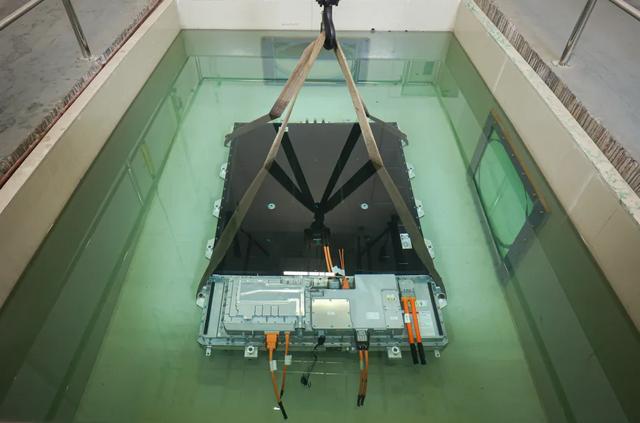
After experiencing high temperatures and severe cold, the battery pack of the Hongqi EH7 was immersed in deep water for another 60 hours.
The current waterproof standard of the power battery is mainly IP67 (the power battery can be placed in 1 meter deep water for 30 minutes without being affected), while the water immersion test of the Hongqi EH7 is to directly immerse the battery pack into a 1 meter deep pool and continue to soak 120 times the national standard time – 60 hours. After the test, it was found that there was no water stain inside the box, indicating that the battery pack was airtight and well insulated. The strength of the Hongqi EH7 battery pack proved that it reached the highest waterproof level IPX8 in the current waterproof experiment.
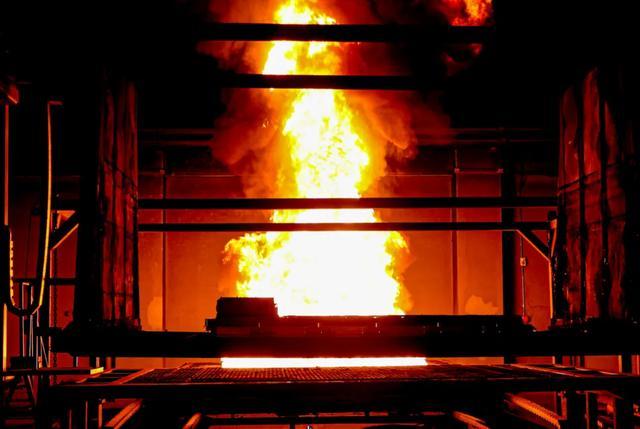
After going through three limit tests of temperature change, water immersion, and fire, Hongqi EH7 still did not have any safety problems. However, do you think this is the end? Next, Hongqi EH7 went through four tests of sand and gravel, wading, lightning strike, and electromagnetism.
Sand and gravel road, Hongqi EH7 cycled 20km at an average speed of 50km/h, the battery pack was not damaged, the insulation resistance test was normal, and the vehicle was still running normally. In the wading scene in simulated rainstorm weather, Hongqi EH7 traveled 600m back and forth in a wading pool with a water depth of 400mm (4 times the national standard), and the vehicle passed perfectly.
In the electromagnetic test process, in a magnetic field with a frequency band of 10Hz-400kHz, the electromagnetic radiation level of Hongqi EH7 under uniform speed, acceleration and other operating conditions is tested, and the margin is greater than 28dB (the larger the margin, the less harmful the vehicle radiation), which is at the leading level in the industry.
The most striking thing is that the Hongqi EH7 also carried out a lightning strike test. After undergoing the triple lightning strike test of applying a pulsed electric field, generating a discharge effect and a continuous discharge effect, the vehicle did not appear abnormal and could still drive normally. The Hongqi EH7 is also the first pure electric vehicle in China to publicly challenge the lightning strike test and successfully pass.
Overall, the power battery of the Hongqi EH7 can resist freezing, overheating, water ingress, spontaneous combustion, and bumps. At the same time, the safety performance of the entire vehicle in extreme scenarios is also very excellent, which intuitively eliminates users’ concerns about battery safety.
How did Hongqi EH7’s "Incorruptible Body of King Kong" come into being?
Lu Xun once said: "A true warrior dares to face a bleak life!" And a truly safe battery should face a cruel trial.
It can be seen that the test of Hongqi EH7 is very rigorous. The previous three tests: temperature change, water immersion, and fire are all completed by the same battery, which is a great test for the battery.
It should be known that lithium batteries are extremely "sensitive" to temperature. Overheating may lead to combustion or even explosion, and overcooling may cause internal lithium dendrites to grow, pierce the film and cause short circuits and other risks. The Hongqi EH7 battery pack can complete these extreme challenges, mainly because the Hongqi EH7 battery pack adopts the six-sided three-dimensional insulation protection scheme developed by Hongqi, which creates a six-sided three-dimensional insulation protection space for the battery, realizes multi-scene non-thermal diffusion, the highest-level IPX8 waterproof, fire protection and other functions, ensuring that the battery can be used safely and normally in the face of various extreme environments.
However, only excellent batteries are not enough, Hongqi EH7 vehicle passive safety is also very good, using 9H4M cage structure to strengthen body safety, high-strength steel consumption is 74%, of which ultra-high-strength hot forming boron steel consumption reached 22%, easily meet the C-NCAP and E-NCAP double five-star safety rating standards, to prevent vehicle collisions or rollover extrusion of the battery, to ensure the integrity of the battery, for safety up the ante.
More importantly, these extremely rigorous test projects are not designed to fill up the "program effect" and show off the strength of the gimmick, but to truly face the pain points of users in new energy vehicles, and solve the multiple concerns of users on vehicle safety through continuous investment and deep digging in technological innovation. This is what all new energy vehicle companies should follow and learn.
"Zero Pressure, Enjoy Peace of Mind", Open the Era of Green Travel "Zero Pressure"
The "zero voltage" travel of Hongqi EH7 is not only reflected in the safety and quality of the vehicle, but also provides users with "zero voltage" car purchase and use value.
In the context of the current industry-wide price war, Hongqi EH7 did not follow up blindly, but extended its focus from a single purchase link to the user value of the product’s entire life cycle. Launched the "Zero Voltage · Peace of Mind" plan, including the three sub-plans of "Zero Voltage Four Lifetime" service, "Zero Voltage Worry-Free GO" rights and interests, and "Zero Voltage Limited Time Jump" product upgrade. Among them, the "Zero Voltage Four Lifetime" service adds "Lifetime Free Maintenance" to the original three after-sales rights of Hongqi brand: "Lifetime Free Warranty", "Lifetime Free Rescue", and "Lifetime Free Car Pickup and Delivery", which further alleviates the worries of new energy users.
If calculated in cash value, Hongqi EH7’s "Zero Pressure · Peace of Mind" plan allows users to enjoy up to 100,000 yuan. This unique "pet powder" method not only allows users to obtain real benefits, but also enhances the use experience of the whole life cycle of the product. More importantly, it is a demonstration of returning to correct values for the whole industry.
It can be seen that in the face of the crazy price of the industry, Hongqi EH7 does not blindly follow up the volume price, but the volume value. One is the safety value. Hongqi EH7 improves the safety factor of the battery and the whole vehicle in multiple dimensions through the pioneering and cutting-edge safety technology, and brings users the safety quality of "zero voltage". The second is the product value of the volume. The longest battery life is 820km, zero hundred acceleration for 3.5 seconds, 5 millimeter wave radars, all-aluminum chassis, and the maximum speed of the motor is as high as 22500r/min…. Hongqi EH7 has reached the flagship level of the same level in terms of performance and intelligence. More importantly, while having excellent product strength, Hongqi EH7 provides users with the rights and interests of value 100,000.
This kind of volume method not only allows users to have a high "sense of gain", but also does not harm the interests of the enterprise, allowing the enterprise to achieve healthy development, which can be described as brilliant!
(This article is originally produced by Wenwu Lane New Media Studio. Please indicate the source when reprinting: Wenwu Lane. The author of this article: Qingfeng, personal opinion, for reference only)
Xinhua News Agency, Beijing, June 7-The 29th session of the 13th the National People’s Congress Standing Committee (NPCSC) held its first plenary meeting on the afternoon of the 7th, and heard a report on the deliberation results of the People’s Republic of China (PRC) Foreign Sanctions Law (Draft) made by Shen Chunyao, vice chairman of the Constitution and Law Committee of the National People’s Congress.
The reporter learned from the office of the spokesman of the Legal Affairs Commission of the National People’s Congress Standing Committee (NPCSC) that for some time, some western countries used various pretexts, such as Xinjiang and Hong Kong, to spread rumors and slander against China, especially in violation of international law and the basic norms of international relations, and imposed so-called "sanctions" on relevant state organs, organizations and state workers in China according to their own laws and grossly interfered in China’s internal affairs. The China government severely condemned this hegemonic act, and people from all walks of life expressed strong indignation. In order to resolutely safeguard national sovereignty, dignity and core interests, and oppose western hegemonism and power politics, since the beginning of this year, the China government has repeatedly announced the implementation of corresponding countermeasures against entities and individuals in relevant countries. "Deal with a man as he deals with you". Around the "two sessions" this year, some NPC deputies, Chinese People’s Political Consultative Conference members and people from all walks of life put forward opinions and suggestions, arguing that it is necessary for the state to formulate a special anti-foreign sanctions law to provide strong support and guarantee for China to counter foreign discriminatory measures according to law. The Work Report of the NPC Standing Committee approved by the Fourth Session of the 13th National People’s Congress clearly stated in the "Main Tasks for the Next Year" that the legal "toolbox" for coping with challenges and preventing risks should be enriched around anti-sanctions, anti-interference and anti-long-arm jurisdiction.
According to the relevant work arrangements, the Legislative Affairs Committee of the National People’s Congress Standing Committee (NPCSC) carefully studied the legislative suggestions put forward by various parties, summarized China’s counter-measures practice and related work practices, sorted out the relevant foreign legislation, solicited the opinions of the central and relevant state departments, and drafted and formed the People’s Republic of China (PRC) Anti-Foreign Sanctions Law (Draft). In April this year, Chairman the National People’s Congress Standing Committee (NPCSC) put forward a legislative motion in accordance with legal procedures, and the draft anti-foreign sanctions law was considered for the first time at the 28th meeting of the 13th the National People’s Congress Standing Committee (NPCSC). Members of the Standing Committee are generally in favor of enacting the anti-foreign sanctions law, and at the same time, they have put forward some perfect opinions and suggestions. The Constitution and Law Committee of the National People’s Congress revised and improved the draft anti-foreign sanctions law according to the deliberation opinions of the Standing Committee and opinions from all sides, and submitted the deliberation result report and the second deliberation draft of the draft to the 29th session of the 13th the National People’s Congress Standing Committee (NPCSC) according to law.
Wechat and Alipay have been "following each other" recently. At the beginning of May, WeChat and Alipay announced their cooperation with Carrefour supermarket chains, and they will be able to pay with WeChat and Alipay wallet at Carrefour offline outlets. Prior to this, the two companies almost simultaneously announced the provision of urban service mobile platforms in 15 cities across the country, trying to "go hand in hand" in the field of public services. Similar time, similar service, following the taxi software, the two companies once again played a "catch-up" in the field of life service, so that users waiting for red envelopes will inevitably get excited. I wonder what the two companies are doing this time.
The IT Times reporter experienced the payment and service of Alipay and WeChat in the city on the spot to see whether it is "two brothers are good" or "life and death".
Mobile Payment: "Good Brothers" Against UnionPay
coverage area
Alipay: The whole family, Haode, Costco, Agriculture, Industry, Carrefour and many other supermarkets have begun to accept Alipay wallet scanning code payment.
Wechat Payment: Some retail supermarkets under Haodehe Agriculture, Industry and Commerce support it, and other supermarkets all said that it will take some time.
Conclusion: Alipay wins.
Entrance position
Alipay: the payment code is set in the first-level directory, and you can swipe the code when you open it.
Wechat payment: the entrance is deep, and you need to enter the secondary directory of WeChat-wallet to find the payment code. From opening the wallet, entering the wallet, entering the password to completing the payment, there are five steps to be completed.
Conclusion: Alipay wins.
User usage frequency
Observation location: Dragon Dream Carrefour Supermarket in Zhongshan Park
The eye-catching position of the cash register is affixed with the eye-catching Alipay payment logo, but the number of users who actively use Alipay is still a minority. The reporter observed for 5 minutes and found that most customers still use cash or bank card to pay by credit card. However, the supermarket staff introduced that Alipay wallets have discounts on weekends for three days, and 7 out of 10 customers will use Alipay wallets.
Conclusion "If there are discounts, there will be no interest" is a practical dilemma faced by retailers accessing Alipay and WeChat payment offline.
Offline team: Alipay has no ability to exclude WeChat payment
"WeChat is a hardware interface that gradually opened offline scanning code in the second half of last year. Many companies are still gradually improving their technical standards. Therefore, the promotion speed is slower than Alipay." Hangzhou Yiling Technology is one of the national agents authorized by Alipay. After promoting Alipay wallet for two years, they launched the offline promotion business of WeChat payment. In their view, as long as Alipay does not put forward "exclusive requirements", the more mobile payments, the better.
Agents have little interest in individual promotion and payment by bill.
As an Internet company, when Alipay develops offline business, except for some large enterprises such as Carrefour, most small enterprises use Alipay cashier, which is authorized to be promoted and operated by offline service providers.
According to the "IT Times" reporter, there are 8 first-level agents directly authorized by Alipay nationwide, and these agents have hundreds of second-level dealers nationwide to promote them. Through this huge network, the coverage of Alipay offline payment outlets has gradually matured.
"Our main business is to provide O2O solutions for offline shops. Offline receipt is only one of them. It is mainly service-oriented and it is basically difficult to make a profit." Mr. Sun, who previously promoted Alipay’s offline payment business in Zibo, Shandong Province, has now quit. "As a secondary agent, in the first year, the rate of 6‰ of merchants’ turnover was all put into Alipay accounts, and dealers could not take it. Only in the second year can there be a 37% or 46% share, but we are basically small and medium-sized merchants, and it is difficult to make a profit."
At present, most Alipay push teams rely on online solution packaging to make profits. The charging standard of an Alipay service window obtained by the reporter shows that the initial construction fee for creating a membership and marketing data analysis platform ranges from 5,600 yuan to 16,800 yuan, and then 20% of it will be charged as a service fee every year. These are the keys to the profitability of these offline enterprises.
The low rate of WeChat is more attractive to agents.
Since the second half of last year, WeChat Pay has gradually opened the hardware interface of offline payment. So far, there are only two or three service enterprises in China that have the ability to conduct offline scanning code payment of WeChat Pay, but these enterprises have basically had mature experience in the offline promotion of Alipay. "One of the conditions for the opening of WeChat payment is the technical ability to improve the interface, and the other is the offline outlet." A person from the first batch of Qiding Yunshang authorized by WeChat payment interface introduced that only companies that have done Alipay have the strength to pick up such conditions.
Although the offline promotion of WeChat payment started late, it has great support for the acquiring rate of core merchants, which is attractive enough for agents. "The rate of WeChat payment in the first year is 3‰, and in the second year, it is divided into 37%, the secondary agent takes seven, and the primary agent takes three. This is significantly greater than the current 4.8‰ support that Alipay gives to first-class agents. " Therefore, some enterprises choose to withdraw from Alipay promotion and invest in offline promotion of WeChat payment.
For traditional entity merchants, whether Alipay or WeChat payment, compared with the traditional bill collection mode, both of them have the advantages of real-time receipt and lower rate. "The traditional bill collection rate is 1%~1.2%, and Alipay and WeChat are much lower than this figure. The actual profit-making will encourage merchants to gradually change the cashier method." In the eyes of the industry, at this stage, whether Alipay leads or WeChat comes from behind, neither of them has the conditions for competition. "What they have to do now is to join hands with UnionPay to compete for the market."
Urban service: It is far from the time of competition.
Shanghai is a must for Alipay and WeChat to open pilot cities. At present, the number of services provided by the two companies is between 10 and 12, among which Alipay provides personalized "scenic spot booking" and "marriage registration reservation", while WeChat city services include "housing tax payment" and "tax invoice information inquiry". The rest, including traffic inquiries and payment of water, electricity and coal fees, are all the same services.
Wechat’s service page is displayed in a list, which is divided into two categories: government service and life service. There are several categories under each category, and the overall page style is relatively blunt. Alipay’s city service page is tiled with icons, and each function item is distributed in a tabular form, with a refreshing overall color scheme and style. Among them, Alipay’s weather conditions and traffic restrictions are directly displayed at the top, while WeChat "hides" this information in the sub-column under the life service category, with a picture of the city at the top.
When using some functions, WeChat "City Service" is obviously not smooth. For example, under the "medical service" project, WeChat only accesses the registered network, while Alipay also has several local hospitals. Enter the "quick appointment" of the registered network platform through WeChat. The hospitals displayed in the list cannot be opened, but they can be opened in Alipay for further operation.
In addition, both of them are connected to the library inquiry system in Shanghai. The reporter inquired about the book "Social Animals" on WeChat, and it was blank. However, when he inquired about the book through Alipay, there were three results. The reporter continued to inquire about several books and found that ordinary books such as "One Thousand and One Nights" and "Economics" could be found on WeChat, but slightly professional books might not be found.
In terms of living expenses, Alipay has more types of fees than WeChat, such as fixed-line broadband, cable TV, traffic violations and property fees. And you can save the manual input of the bill number by similar "sweeping".
As far as the current overall usage is concerned, Alipay’s "city service" response speed and fluency are better than WeChat’s. However, Yin Ting, the person in charge of the WeChat project in Shanghai, told the IT Times reporter that "the technology is gradually improving some functions of WeChat city service, such as applying the voice recognition bill number technology of PayPal to the living payment of’ city service’".
Offline competition: whoever builds the platform first wins in the end.
The government is open-minded and the two companies are fighting for speed.
"After accessing the two platforms, it has indeed achieved a good diversion effect, especially in the registration and appointment. In the past, a lot of time was wasted in queuing and receiving the form. Now some information can be completed directly on the mobile phone, and the appointment also makes us better. Arrange resources and be more efficient. If you apply for entry and exit, the queue time is now within 10 minutes. " Wang Jiwei, the head of Weibo and WeChat, told the IT Times reporter.
At present, Shanghai Public Security has connected some service functions of entry-exit management and traffic information to WeChat, and indirectly connected to Alipay’s platform through the "city service" platform paid by Sina Weibo. In a month or so, they have seen the positive effects.
Openness is the unanimous attitude of most functional departments that open electronic interfaces at present. In their view, as long as the interface is opened to WeChat within the allowable scope, there is no reason not to open it to Alipay, Weibo or Baidu, which is convenient for the public and improves the efficiency of the government, killing two birds with one stone, so under the premise of ensuring security, they do not rule out open cooperation with a number of similar Internet platforms. "The public security department has its own security mechanism and will open the corresponding interface only under the premise of ensuring security." Wang Jiwei said.
The government’s attitude is open, and the remaining problem is speed for Alipay and WeChat. Yin Ting told the IT Times reporter, "Many projects are being promoted in coordination with various commissions, but because the government needs time to divide manpower and funds, it is impossible to promote them too quickly. At present, some problems are being solved and services are gradually improving. " Ant Financial said that in addition to actively cooperating with government departments, they also set up a special team to discuss cooperation with major hospitals and other institutions. (The authors of this article, Zhang Weiwei and Zhang Cheng, were authorized by the IT Times to launch the titanium media network)
The bullet train that ran outside for 48 hours "went home" for maintenance. (Reporter wanglili)
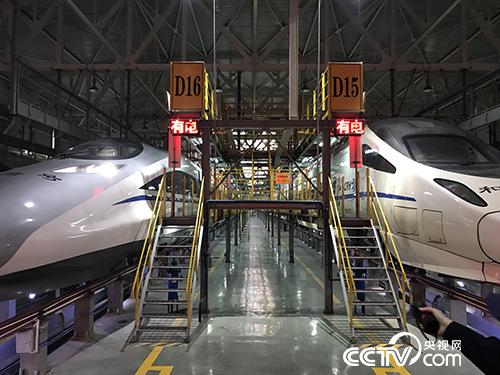
Cctv news(Reporter wanglili) After 6: 30 pm every day, after 48 hours of running outside, the motor trains will return to Taiyuan EMU for routine maintenance and overhaul.
There are many departments in the EMU, such as electric workshop, communication workshop, dispatching and monitoring center, locomotive room, passenger room, cleaning room, etc. At this time, the work of Wang Xiaoxia, secretary of the Party branch of Taiyuan EMU on-board equipment workshop of Taiyuan Electric Section of China Railway Taiyuan Bureau Group Co., Ltd., who is responsible for the core equipment "train overspeed protection device" (hereinafter referred to as ATP), began.
On February 1st, the annual China Spring Festival travel rush was launched again. In the world’s largest population migration, which is expected to send 2.98 billion passengers, the number of passengers sent by railway is expected to reach 390 million.
As the first generation of emu repairman in China who grew up with emus, Wang Xiaoxia has been engaged in emu maintenance for eight years, and more than 4,000 emus have been overhauled by her hand.
"Taiyuan Railway Company has jurisdiction over five high-speed railway lines and 48 sets of motor trains. For high-speed motor trains with a top speed of more than 300 kilometers per hour, meticulous and rigorous maintenance work is the key to ensuring the safe operation of high-speed motor trains." Wang Xiaoxia said.
Maintenance of railway signalman changing to high-end bullet train
Wang Xiaoxia was born in a railway worker’s family. Living beside the railway since childhood, she has a natural affection for railway work. In 2007, after graduating from graduate school, she was assigned to taiyuan railway administration and became a railway signalman.
In 2009, Shitai Passenger Dedicated Line was opened, and the first batch of EMUs imported from taiyuan railway administration were put into operation. At that time, as one of the few female graduate students who overhauled high-speed rail equipment in the whole railway, Wang Xiaoxia changed from an ordinary signalman to a post to overhaul ATP of high-end bullet trains.
If the wheels of the emu are compared to the limbs and the engine to the heart, the on-board equipment is the brain, especially the ATP, the core component of the on-board equipment, is the central nervous system of the emu and can be called the black box of the emu.
In the interview, Kang Chunhui, deputy secretary of the Party Committee of Taifei Electric Power Department, said that ATP is responsible for receiving and processing a large amount of digital information, and the good operation and reliability of the equipment is equivalent to giving the EMU a "clairvoyance and clairvoyance". If there is a problem with ATP, the EMU will not be able to start running. Wang Xiaoxia’s workshop is responsible for the daily maintenance of ATP equipment of 48 operating EMUs, such as Daxi High-speed Railway, Shitaike Special Railway and Beijing-Guangzhou High-speed Railway.
"Brain Doctor" in the EMU
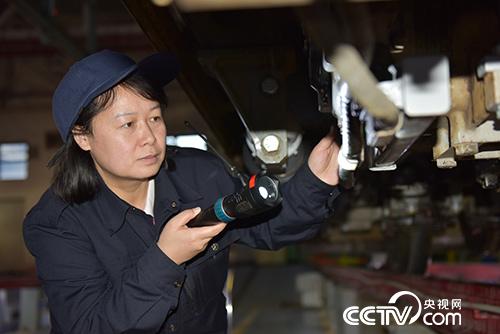
Wang Xiaoxia is testing high-speed trains. (Reporter wanglili)
At 18: 40 pm on February 1st, Taiyuan EMU Operation Station, a modern maintenance depot that can accommodate 12 high-speed trains at the same time, was brightly lit.
Driving during the day and overhauling at night are the processes of high-speed trains. The overhaul time is from 6 pm the day before to 7 am the next day, with the peak from 11 pm to 3 am the next day.
It is understood that the maintenance of a motor train needs the unified command of the dispatcher and can be completed within 2 hours under the coordinated operation of various positions.
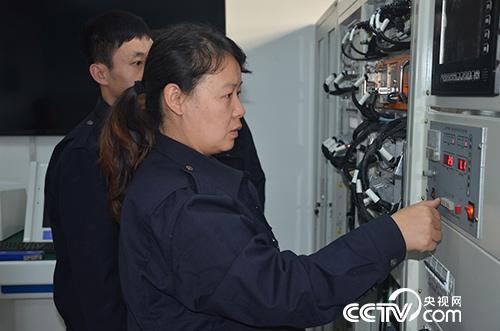
"Nothing can go wrong in any link, just as nervous as fighting." Wang Xiaoxia’s work area is responsible for the ATP system maintenance of 24 motor trains. On the train, a set of cabinets called "system host" is the focus of their inspection. "It is the core equipment to ensure the safe operation of EMU. In case of abnormal situation, it will automatically alarm the driver. If the driver fails to follow the prompts, it will automatically control the train immediately to ensure the safe and stable stop of the train."
After the inspection on the train, Wang Xiaoxia has to drill into the inspection ditch to check the induction device at the bottom of the train. If you find something abnormal, deal with it urgently. If you can’t handle it, you can only detain the car the next day.
There are 40 employees in Wang Xiaoxia’s work area, all of whom are young guys and girls, who stay up all day and go out at night. Everyone jokingly said that they are "brain doctors" living "American time".
Now it seems that the work that is easy to master is far from so simple at the beginning. As a new thing that I just came into contact with in 2009, the equipment and testing equipment used on the train are all imported, and there are only several foreign languages that I need to understand. As a graduate student, Wang Xiaoxia is duty-bound to take on the responsibility of overcoming technical difficulties.
In the interaction with training teachers, manufacturers, motor train drivers and mechanics, Wang Xiaoxia gained more rich experience and practice. She said that "ensuring the safety of high-speed rail and passengers is foolproof" is not an abstract concept, but a concrete analysis, judgment, answer and guidance of all data.
"There are four types of ATP in the EMU attached to Taiyuan Bureau of High-speed Train, and the different types are very different. There are as many as 20 kinds of analysis and monitoring software needed for daily maintenance." Wang Xiaoxia said that their work is like running after the frontier of science and technology, and they dare not be sloppy and lax.
Innovation Studio specializes in treating "intractable diseases" of motor trains.
Wang Xiaoxia made a simulation in front of his own simulation test system. (Reporter wanglili)
Some time ago, there was a problem with the ATP system setting of a motor train about to leave the warehouse. According to the driver’s description, Wang Xiaoxia decisively asked the driver to manually modify the ATP system setting parameters. In less than one minute, the system settings returned to normal, the danger was eliminated, and the EMU was out of the library according to the established time.
Shanxi’s dry climate is prone to static electricity, which makes ATP equipment accessories and other precision equipment prone to problems or damage.
"At that time, there was no regular testing equipment for these spare parts in the whole road. Once the ATP failure required replacement of spare parts, I didn’t know whether the replaced spare parts were qualified." Kang Chunhui said that in order to solve this problem, Wang Xiaoxia independently developed the indoor simulation test system for on-board equipment of EMU, which filled the blank of indoor simulation test system for on-board equipment without train control.
Wang Xiaoxia’s two inventions not only solved the problem of periodic power-on test for spare parts of EMU, but also increased the training opportunities for employees to solve "intractable diseases" in practical operation. What is more impressive is that the two systems can generate direct economic benefits of about 10 million yuan per year.
With the arrival of Spring Festival travel rush, Wang Xiaoxia’s work became busier. During the day, she focused on management and business skills, and at night, she followed her classes to solve various problems at any time and place. In the interview, she said: "For the high-speed train, even a screw is a big deal, especially the ATP is related to the safety of the EMU. What they have to do is to ensure the safety of the train and let every passenger go home safely. "
Core Tip: As a key technology to lead a new round of scientific and technological revolution and industrial transformation, the generative artificial intelligence represented by ChatGPT has constantly spawned new scenarios, new formats, new models and new markets, changed the mode of production of information and knowledge, and reshaped the interaction mode between human beings and technology, which has a great impact on education, finance, media and games. In this context, countries around the world have introduced artificial intelligence development strategies and specific policies to seize the strategic commanding heights. At the same time, the security risks exposed by generative artificial intelligence, such as data leakage, false content generation and improper use, have also attracted wide attention from all countries. The development, application and governance of generative artificial intelligence is no longer a common challenge faced by a certain country but the whole international community.
[Abstract] As a key technology to lead a new round of scientific and technological revolution and industrial transformation, the generative artificial intelligence represented by ChatGPT has constantly spawned new scenarios, new formats, new models and new markets, changed the mode of production of information and knowledge, and reshaped the interaction mode between human beings and technology, which has a great impact on education, finance, media and games. In this context, countries around the world have introduced artificial intelligence development strategies and specific policies to seize the strategic commanding heights. At the same time, the security risks exposed by generative artificial intelligence, such as data leakage, false content generation and improper use, have also attracted wide attention from all countries. The development, application and governance of generative artificial intelligence is no longer a common challenge faced by a certain country but the whole international community. In order to effectively deal with the new challenges of generative artificial intelligence to information content governance, we should balance the relationship between security and development, the relationship between technological innovation and technological governance, and the relationship between corporate compliance obligations and corporate affordability.
Keywords: multidimensional balance of internal and external challenges in the legislation of generative artificial intelligence governance model [Chinese library classification number] D92 [document identification code] a
Generative AI (Generative AI) is a new technology in the development of artificial intelligence, which can generate new content according to probability by statistical methods, such as video, audio, text and even software code. By using Transformer (a neural network model based on self-attention mechanism), generative artificial intelligence can deeply analyze the existing data sets, identify the location connection and correlation among them, and then continuously optimize and train with the help of feedback reinforcement learning from human feedback to form a large language model, and finally make decisions or predictions for the generation of new content. ① In addition to text generation and content creation, generative artificial intelligence also has a wide range of application scenarios, such as customer service, investment management, artistic creation, academic research, code programming, virtual assistance and so on. In a word, self-generation, self-learning and rapid iteration are the basic characteristics that distinguish generative artificial intelligence from traditional artificial intelligence.
The Interim Measures for the Management of Generative Artificial Intelligence Services (hereinafter referred to as the Interim Measures) officially issued by seven departments, including the National Network Information Office, came into effect on August 15, 2023, aiming at promoting the healthy development and standardized application of generative artificial intelligence and safeguarding national security and social public interests. As a key technology to lead a new round of scientific and technological revolution and industrial transformation, generative artificial intelligence represented by ChatGPT has constantly spawned new scenarios, new formats, new models and new markets, changed the mode of production of information and knowledge, and reshaped the interaction mode between human beings and technology, which has a great impact on education, finance, media and games. In this context, countries around the world have introduced artificial intelligence development strategies and specific policies to seize the strategic commanding heights. At the same time, the security risks exposed by generative artificial intelligence, such as data leakage, false content generation and improper use, have also attracted wide attention from all countries. It can be said with certainty that the development, application and governance of generative artificial intelligence is no longer a common challenge faced by a certain country but the whole international community.
Comment on the main supervision modes of artificial intelligence abroad
Artificial intelligence is a "double-edged sword", which promotes social progress, but also brings risks and challenges. The international community is committed to continuously promoting the development of artificial intelligence. For example, UNESCO adopted the first global agreement on artificial intelligence ethics-Proposal on Artificial Intelligence Ethics, which defined ten principles, including proportionality and non-harm, safety and security, fairness and non-discrimination. Since 2018, the EU has continued to promote the design, development and deployment of artificial intelligence, while striving to standardize the use and management of artificial intelligence and robots. The European Union’s Artificial Intelligence Act, which came into effect in early 2024, helped this work reach a climax and even became a milestone in the history of artificial intelligence governance. The United States pays more attention to the development of artificial intelligence, and regulates the development of artificial intelligence with the blueprint of artificial intelligence bill of rights (hereinafter referred to as the blueprint of bill of rights) as the main measure. In view of the relatively mature and representative measures of artificial intelligence governance in the European Union and the United States, the advantages and disadvantages of different regulatory models are discussed in the following, hoping to provide reference for the healthy development and effective governance of artificial intelligence in China.
EU artificial intelligence legislation: giving priority to safety and giving consideration to fairness. From the legislative history, in April 2021, the European Commission issued the legislative proposal "Regulations of the European Parliament and the Council on Formulating Uniform Rules for Artificial Intelligence (Artificial Intelligence Law) and Amending Some EU Legislation" (hereinafter referred to as the "Artificial Intelligence Act"), which opened the "hard law" road of artificial intelligence governance. In December 2022, the final version of the compromise draft of the Artificial Intelligence Act was formed. In June 2023, the European Parliament passed the draft negotiating authorization of the Artificial Intelligence Act and revised the original proposal. On December 8, 2023, the European Parliament, the European Council and the European Commission reached an agreement on the Artificial Intelligence Act, which stipulated comprehensive supervision in the field of artificial intelligence. On the whole, the Artificial Intelligence Act establishes an ethical and legal framework for the development and use of artificial intelligence in the European Union, supplemented by the Directive on Responsibility for Artificial Intelligence to ensure its implementation. Several rounds of discussions on the Artificial Intelligence Act mainly focused on the following contents:
The first is the definition of artificial intelligence and the scope of application of the bill. Article 3 of the Artificial Intelligence Act defines artificial intelligence as software developed by one or more technologies and methods, which can affect the output of interactive environment (such as content, prediction, suggestion or decision) and achieve specific goals specified by people. This definition has a wide range, which may cover a large number of software that is not traditionally regarded as artificial intelligence, which is not conducive to the development and governance of artificial intelligence. Therefore, the current version limits the definition of artificial intelligence to "a system based on machine learning or logic and knowledge", which aims to run at different levels of autonomy and can influence the output of prediction, suggestion or decision-making in physical or virtual environment for explicit or implicit goals. At the same time, Annex I and the authorization of the European Commission to modify the definition of artificial intelligence were deleted. Although the Artificial Intelligence Act does not involve generative artificial intelligence, the appearance of ChatGPT makes legislators add definitions of general artificial intelligence and basic model in the amendment, and requires generative artificial intelligence to comply with additional transparency requirements, such as disclosing the source of content and designing models to prohibit illegal generation. The Artificial Intelligence Act has extraterritorial effect and applies to all providers and deployers of artificial intelligence systems (whether established in the EU or in a third country), all distributors and importers, authorized representatives of providers, manufacturers of certain products established or located in the EU, and EU data subjects whose health, safety or basic rights are greatly affected by the use of artificial intelligence systems.
The second is the supervision mode of artificial intelligence. The "Artificial Intelligence Act" adopts a risk-based approach, which classifies and sets different obligations according to the potential risks to health, safety and the basic rights of natural persons: first, unacceptable risks are prohibited from being deployed by any enterprise or individual; The second is high risk, which allows relevant subjects to put them on the market or use them after fulfilling their obligations such as prior assessment, and requires continuous monitoring during and after the event; The third is finite risk, which does not need to obtain a special license, certification or fulfill the obligations of reporting and recording, but should follow the principle of transparency and allow proper traceability and interpretability; The fourth is low risk or minimum risk, and the corresponding subject can deploy and use according to free will. As far as generative artificial intelligence is concerned, because it has no specific purpose and can be applied to different scenarios, it cannot be classified according to the general mode or operation mode, but should be based on the expected purpose and specific application field of developing or using generative artificial intelligence. ②
The third is the general principle of artificial intelligence. Specifically, it includes: human agency and supervision: the development and use of artificial intelligence system must be a tool to serve human beings, respect human dignity, individual autonomy and function, and be properly controlled and supervised by human beings; Technical robustness and security: the development and deployment of artificial intelligence should minimize accidents and unexpected damage, ensure robustness when unexpected problems occur, and be flexible when malicious third parties try to change the performance of artificial intelligence systems and illegally use them; Privacy and data protection: The artificial intelligence system must be developed and used according to the existing privacy and data protection rules, and at the same time, it must deal with data that meet high standards in terms of quality and integrity; Transparency: The development and use of artificial intelligence system must allow proper traceability and interpretability, make human beings aware of their communication or interaction with artificial intelligence system, and properly inform users of the capabilities and limitations of artificial intelligence and the rights enjoyed by the affected people; Non-discrimination and fairness: the development and use of artificial intelligence systems must include different participants, promote equal use, gender equality and cultural diversity, and avoid discriminatory influence and unfair prejudice prohibited by EU or national laws; Social and environmental well-being: Artificial intelligence systems should be developed and used in a sustainable and environmentally friendly way, benefiting everyone, while monitoring and evaluating the long-term impact on individuals, society and democracy.
The EU intends to establish a global standard for artificial intelligence supervision through the Artificial Intelligence Act, so that Europe can gain a dominant position in international intelligence competition. The "Artificial Intelligence Act" has formulated relatively reasonable rules for dealing with artificial intelligence systems, which can avoid discrimination, surveillance and other potential hazards to a certain extent, especially in areas related to basic rights. For example, the Artificial Intelligence Act lists some uses that prohibit artificial intelligence, and facial recognition in public places is one of them. In addition, it integrates the control measures to mitigate risks into the business departments where risks may occur, which can help organizations understand the cost-effectiveness of artificial intelligence systems, conduct compliance (self-review) to clarify responsibilities and obligations, and finally confidently adopt artificial intelligence. At the same time, however, the Artificial Intelligence Act also has defects in risk classification, supervision, rights protection and responsibility mechanism, etc. For example, it adopts horizontal legislation, trying to bring all artificial intelligence into the scope of supervision, without in-depth consideration of the different characteristics of artificial intelligence, which may lead to the problem that relevant risk prevention measures can not be implemented. ③
American artificial intelligence legislation: emphasizing self-regulation and supporting technological innovation. Under the global background of artificial intelligence law and policy making, the United States has gradually formed a regulatory framework based on the voluntary principle. The comprehensive regulatory measure in the United States is the Blueprint of Bill of Rights issued by the White House Office of Science and Technology Policy (OSTP) in October 2022, which aims to support the protection of citizens’ rights during the design, deployment and governance of automation systems. Under the guidance of "Blueprint of Bill of Rights", federal departments began to perform their respective duties and set out to formulate specific policies. For example, the US Department of Labor formulated the Fair Manual of Artificial Intelligence, which aims to prevent artificial intelligence from prejudicing job seekers and employees based on race, age, gender and other characteristics. The core content of the Blueprint of the Bill of Rights is five principles: a safe and effective system: the public is protected from unsafe or ineffective systems; Algorithm discrimination protection: the public should not face the discrimination of algorithms and systems, and the automation system should be used and designed in a fair way; Data privacy: the automation system should have built-in protection measures to ensure that the public’s data is not abused, and to ensure that the public enjoys the leading right to use the data; Know and explain: the public has the right to know that they are using the automation system, and understand what it is and how to produce results that have an impact on the public; Principle of substitutability: Under appropriate circumstances, the public should be able to choose not to use the automation system and use manual alternatives or other alternatives. ④ Because the above principles are not regulated, they are not binding.Therefore, the Blueprint of the Bill of Rights is not an enforceable "Bill of Rights" with legislative protection, but rather a forward-looking blueprint for governance based on future assumptions.
At present, the US Congress has adopted a relatively non-interference approach to the supervision of artificial intelligence, although the Democratic leadership has indicated its intention to introduce a federal law to supervise artificial intelligence. Chuck Schumer, the majority leader of the US Senate, proposed a new framework to guide the legislation and supervision of artificial intelligence in the future, including "who", "where", "how" and "protection", requiring technology companies to review and test artificial intelligence systems before releasing them, and provide users with the results. However, in the case of checks and balances between the two parties in the United States, the possibility of passing the law through Congress is low, and even if there is a chance to pass it, it will need several rounds of revision. In contrast, faced with the strategic competitive pressure brought by the European Union’s "Artificial Intelligence Act" and the multi-field security risks of generative artificial intelligence represented by ChatGPT, the federal agencies in the United States have taken an active intervention attitude and conducted supervision within their jurisdiction. For example, the US Federal Trade Commission (FTC) actively supervises deceptive and unfair behaviors related to artificial intelligence by implementing the Fair Credit Reporting Act and the Federal Trade Commission Act. The first investigation that OpenAI faced was conducted by FTC; In January, 2023, the National Institute of Standards and Technology (NIST) formulated the Risk Management Framework of Artificial Intelligence, which classified the risks existing in artificial intelligence in detail. In April 2023, the US Department of Commerce publicly solicited opinions on accountability measures for artificial intelligence, including whether artificial intelligence models should go through certification procedures before release.
At the local level in the United States, California passed the California Consumer Privacy Act of 2018 (CCPA) as a positive response to the EU General Data Protection Regulations. In 2023, under the impetus of Senator Bauer Kahan, California proposed the AB331(Automated decision tools) bill, requiring deployers and developers of automated decision tools to conduct an impact assessment of any automated decision tools they use on or before January 1, 2025, and every year thereafter, including the purpose of automated decision tools and a statement of their expected benefits, uses and deployment environment. New york has promulgated the Automated Employment Decision Tools Act (AEDT Law), which requires employers and professional platforms that use the Automated Employment Decision Tools in their recruitment and promotion decisions to conduct a brand-new and thorough review of the artificial intelligence system and a more comprehensive risk test to assess whether it falls within the scope of AEDT Law. In addition, legislatures in Texas, Vermont and Washington state have introduced relevant legislation, requiring state institutions to review the artificial intelligence systems being developed and used, and effectively disclose the use of artificial intelligence. It can be seen that local governments in the United States still have a positive attitude towards artificial intelligence governance. The main challenge faced by local governments is how to supervise artificial intelligence innovation in Silicon Valley with minimal obstacles. In California, for example, in order to overcome this challenge,The proposed bill has two provisions: first, the focus of artificial intelligence governance is on the rights, opportunities and risks of citizens’ access to key services, rather than the details of specific technologies, which can allow the innovative development of artificial intelligence; The second is to establish the transparency of artificial intelligence, requiring developers and users to submit an annual impact assessment to the California Department of Civil Rights, which can explain in detail the types of automation tools involved, for public access. Developers also need to develop a governance framework, detailing how the technology is used and its possible impact. In addition, the California Act also mentions the issue of private litigation rights, which provides a remedy for the protection of rights by allowing individuals to file lawsuits when their rights are violated. ⑤
At present, the focus of artificial intelligence supervision in the United States is still to apply existing laws to artificial intelligence, rather than to formulate specialized artificial intelligence laws. For example, FTC has repeatedly stated that Article 5 of the Federal Trade Commission Act "Prohibition of Unfair or Fraud" can be fully applied to artificial intelligence and machine learning systems. In fact, how to coordinate the conflict between existing laws and artificial intelligence is not only an urgent task for a certain country, but also an urgent problem facing the international community. At present, the US Congress has not reached a consensus on the federal legislation on artificial intelligence supervision, including the regulatory framework, risk classification and other specific contents. Chuck Schumer, the majority leader of the US Senate, advocates comprehensive supervision of artificial intelligence similar to that of the European Union, and speeds up the legislative process of Congress by formulating frameworks and special forums, which conflicts with the voluntary principle of the United States. Therefore, it will take a long time for the legislation of artificial intelligence supervision at the federal level to appear.
The New Challenge of Generative Artificial Intelligence to Information Content Governance
Generally speaking, the risks faced by artificial intelligence mainly come from three aspects: technology, market and specification. ⑦ The generative artificial intelligence represented by ChatGPT is close to the goal of general artificial intelligence, but it also brings new challenges to information content governance, which urgently needs forward-looking and targeted theoretical research. The main perspectives of academic analysis of the risks of generative artificial intelligence include: first, based on the general risks of artificial intelligence and combined with the unique characteristics of generative artificial intelligence, the risks in intelligent ethics, intellectual property protection, privacy and personal data protection are studied; ⑧ The second is to study the risk and governance of generative artificial intelligence in specific fields, such as the risk of sentencing deviation of generative artificial intelligence in judicial judgment; Thirdly, based on the operation structure of generative artificial intelligence, the risk problems are studied from preparation, operation to generation, and then corresponding measures are taken, such as using technology and management to correct the algorithm discrimination risk of generative artificial intelligence in operation stage. ⑨ This paper thinks that it can also be analyzed from the internal and external perspectives. The internal challenges are the challenges existing in the model itself, including input quality problems, processing problems and output quality problems. External challenges come from non-model itself, including improper use risk and legal supervision risk.
Input quality: Artificial intelligence consists of algorithm, computing power and data elements, in which data is the basis of artificial intelligence and determines the accuracy and reliability of its output to some extent. Generative artificial intelligence is a kind of artificial intelligence, so its output (generated content) will also be affected by the quantity and quality of data. Generative artificial intelligence must be trained with high-quality data. Once the data set is polluted or tampered with, the trained generative artificial intelligence may damage users’ basic rights, intellectual property rights, personal privacy and information data rights, and even produce social prejudice.
Handling process problems: In addition to data, the algorithm model used in training will also affect the output results of artificial intelligence. If the training of artificial intelligence is regarded as a cuisine, the training data affects the quality of the final cuisine with the role of "material", while the algorithm model plays its own role with the role of "recipe", and both are indispensable. Once the selected algorithm model has problems or is inconsistent with the expected purpose, even if more and better data are input, a well-behaved artificial intelligence system cannot be obtained. The discrimination and prejudice of artificial intelligence caused by machine learning algorithms and training data are collectively called pre-existing algorithm bias, which corresponds to the sudden algorithm bias caused by the emergence of new knowledge, new formats and new scenarios. Technological change has not eliminated the problem of false generation, but only packaged and concealed it. Therefore, generative artificial intelligence often has sudden algorithm bias, which further increases the risk of use and the difficulty of governance, thus requiring more accurate protective measures.
Output quality problem: In fact, the risk essentially stems from people’s insufficient ability to recognize and control things and cannot be solved in time before the problem sprouts or even erupts. From this point of view, the controllability of technology is inversely proportional to its risk, and the more difficult it is to control, the higher the risk. Large language model and thinking chain not only endow generative artificial intelligence with the ability of logical deduction, but also make its output content more and more difficult to predict. In other words, generative artificial intelligence has low controllability and high potential risks. For example, due to social and cultural differences, the output of generative artificial intelligence may be appropriate in one cultural background, but it is offensive in another cultural environment. Humans can distinguish such differences, but generative artificial intelligence may be unable to distinguish the subtle differences of culture due to the lack of cultural pre-design, and inadvertently produce inappropriate content.
Risk of improper use: Generative artificial intelligence has high intelligence, but the difficulty and cost of using it are low, which provides possible space for some people to engage in illegal activities by using its powerful power, and the risk of improper use arises from this. The People’s Republic of China (PRC) Academic Degrees Law (Draft) drafted by the Ministry of Education of China clearly stipulates the use of artificial intelligence to write dissertations and other behaviors and their handling. OpenAI said that it is training ChatGPT on sensitive words, and when users’ questions obviously violate the embedded ethics and legislation, ChatGPT will refuse to answer them. Even so, some people can still bypass the pre-set "firewall" of ChatGPT and instruct them to generate illegal content or complete illegal operations, and the risk of improper use has not been effectively curbed. In the long run, generative artificial intelligence may lead to a crisis of social trust, which will make people fall into the dilemma of being difficult to distinguish between true and false, and eventually lead to the "end of truth" and make human society enter the "post-truth era". ⑩
Legal supervision risk: the internal input quality problems, processing process problems and output quality problems of generative artificial intelligence, as well as the external improper use risks jointly push its supervision difficulty to a new peak, resulting in the legal risk of supervision failure. The legal risk of generative artificial intelligence is not limited to a specific field, but crosses multiple fields and needs the collaborative governance of multiple departments. The terms of use of generative artificial intelligence often lack authorization to deal with user interaction data, which may lead to personal privacy and national security problems, because some data in large enterprises already have public attributes, and once leakage occurs, it will not only harm the interests of enterprises, but also pose a threat to national security. In addition, the problem that the decision-making process of generative artificial intelligence is not transparent enough will also have an impact on legal supervision, and even become a decisive reason for the regulatory authorities to prohibit its deployment in specific fields.
Solution: seek multi-dimensional balance
Facing the great application value of generative artificial intelligence and the internal and external risk challenges, we need to make a reasonable choice. At present, although all countries in the world have doubts about the safety of generative artificial intelligence, they unanimously recognize its application potential in international competition, economic development, digital government construction, etc. By formulating relevant policies and regulations, they try to handle the relationship between safety and development, technological innovation and public interest, laying the premise and guarantee for the use of generative artificial intelligence. Our country is no exception. Judging from Article 1 of the Interim Measures, the purpose of this law is "to promote the healthy development and standardized application of generative artificial intelligence, safeguard national security and social public interests, and protect the legitimate rights and interests of citizens, legal persons and other organizations". Article 3 clearly points out the general attitude of legislators to the governance of generative artificial intelligence, that is, "adhere to the principle of paying equal attention to development and safety, promoting innovation and combining governance according to law." In fact, through this principle, we can find a solution that is suitable for China’s national conditions, that is, to seek a multi-dimensional balance of generative artificial intelligence governance.
First of all, we should balance the relationship between security and development. Under the overall national security concept, security is the premise of development, development is the guarantee of security, and non-development is the greatest insecurity. China must actively develop modern scientific and technological means such as generative artificial intelligence to promote economic development and social progress, and constantly enhance China’s international competitiveness. Article 3 of the "Interim Measures" points out that "the generative artificial intelligence service shall be subject to inclusive, prudent and classified supervision". Regarding specific measures, the Interim Measures also gives a plan: Articles 5 and 6 specify the direction and content of encouraging development, such as supporting industry organizations, enterprises, educational and scientific research institutions, public cultural institutions, relevant professional institutions, etc. to cooperate in technological innovation, data resource construction, transformation and application, and risk prevention of generative artificial intelligence; Articles 7 and 8 respectively put forward requirements for the safety of generative artificial intelligence from training data processing and data labeling, such as pre-training and optimization training. For example, the service provider of generative artificial intelligence should use data and basic models with legal sources, and shall not infringe on the intellectual property rights enjoyed by others according to law.
Secondly, the relationship between technological innovation and technological governance should be balanced. While taking measures to accelerate the innovative development of generative artificial intelligence, we should also recognize the internal and external risk challenges it brings and deal with them accordingly. In short, we should govern in innovation and innovate in governance to ensure that technological innovation runs on the track of rule of law. To this end, on the one hand, we should give play to the role of policies in leading economic and social development, actively encourage enterprises to carry out technological innovation by simplifying administrative licensing and reducing taxes, and at the same time guide enterprises to use their own development to promote economic and social development, and confirm their legitimate rights and interests through legislation; On the other hand, adhere to the bottom line of governance according to law, and timely regulate and deal with possible violations of laws and regulations by enterprises. Specifically, according to the provisions of Article 19 of the Interim Measures, the relevant competent departments shall supervise and inspect the generative artificial intelligence services according to their duties, and the providers shall cooperate with them according to law; For the acts of generative artificial intelligence providers that violate the Network Security Law of the People’s Republic of China, the Data Security Law of People’s Republic of China (PRC) and the Personal Information Protection Law of People’s Republic of China (PRC), they shall be fined, ordered to stop providing services, and investigated for criminal responsibility. If the existing laws and regulations can’t effectively regulate the new format of technological development, the competent department can first give a warning, informed criticism, and order it to make corrections within a time limit, and then legislate in time (the dialectical relationship between special legislation and general legislation, national legislation and local legislation needs to be considered) to ensure that there are laws to follow and administration according to law.
Finally, the relationship between corporate compliance obligations and corporate affordability should be balanced. Effective governance of generative artificial intelligence requires enterprises that carry out model training and provide generative services to undertake corresponding compliance obligations, but such obligations must be appropriate and should not exceed the affordability of enterprises. In this regard, we can find normative support from the relevant provisions of the Interim Measures: First, Article 3 requires classified and hierarchical supervision of generative artificial intelligence services, which implies that governance should be carried out according to specific risks, and different compliance obligations should be put forward for enterprises that provide different generative artificial intelligence obligations in different fields, which is quite similar to the risk-based hierarchical supervision of the Artificial Intelligence Act; Second, compared with the original draft for comments, Articles 7 and 8 have significantly reduced the compliance requirements for enterprises to develop and train generative artificial intelligence. For example, Item (4) of Article 7 has been changed to "Take effective measures to improve the quality of training data and enhance the authenticity, accuracy, objectivity and diversity of training data", and Article 8 has been changed to "Sampling and verifying the marked contents" Third, Articles 9 and 14 give the provider more flexible compliance space by redistributing the rights and obligations of service providers and users, so as to enhance their willingness to actively comply. For example, changing "content producer responsibility" to "network information content producer responsibility",So that enterprises providing services do not have to bear the responsibility for users’ malicious abuse of illegal content generated by generative artificial intelligence.
Generative artificial intelligence technology has caused great waves in many industries, such as commerce and trade, news communication, etc. How to effectively supervise and make it serve human society is a realistic proposition that all countries should consider and solve for a long time. The artificial intelligence supervision mode chosen by different countries reflects specific social values and national priorities, and these different requirements may conflict with each other, such as paying attention to protecting users’ privacy and promoting technological innovation, thus creating a more complicated supervision environment. Although there are many differences between the EU’s "safety first, giving consideration to fairness" and the US’s "emphasizing self-regulation and supporting technological innovation", there is also a consensus part, which can more or less promote the technological innovation, safe use and legal governance of generative artificial intelligence. At the same time, transparency and interpretability will be the key to abide by emerging regulations and cultivate trust in generative artificial intelligence technology. The legislative trends in Europe and America also remind China to carry out artificial intelligence legislation at the national level as soon as possible, determine the basic principles of artificial intelligence governance, as well as the risk management system, the distribution of main responsibilities, legal responsibilities, etc., coordinate the national governance layout, and give full play to local enthusiasm, and try first through local legislation to avoid being unavailable and accumulate experience for national artificial intelligence legislation.
(The author is a professor and doctoral supervisor at Guanghua Law School of Zhejiang University)
[Note: This article is the phased achievement of the major project of the National Social Science Fund "Research on Establishing and Perfecting China’s Network Comprehensive Governance System" (project number: 20ZDA062)]
[Notes]
①Ouyang L,Wu J,Jiang X,et al."Training language models to follow
instructions with human feedback",Advances in Neural Information
Processing Systems,2022(35),pp.27730-27744.
②Natali Helberger,Nicholas Diakopoulos."ChatGPT and the AI
Act",Internet Policy Review,2023,12(1).
③ Zeng Xiong, Liang Zheng and Zhang Hui: Regulation Path of Artificial Intelligence in EU and Its Enlightenment to China —— Taking the Artificial Intelligence Act as the Analysis Object, E-government, No.9, 2022.
④The White House,"Blueprint for an AI Bill of Rights",October
2022.
⑤Friedler, Sorelle, Suresh Venkatasubramanian, Alex Engler,"How
California and other states are tackling AI legislation",Brookings,March
2023.
⑥Müge Fazlioglu."US federal AI governance: Laws, policies and
strategies",International Association of Privacy Professionals,June
2023.
⑦ Cheng Le: "Research on the Development Trend of Artificial Intelligence and Guiding Ideas of Standardization", National Governance, No.6, 2023.
⑧ Cheng Le: The Legal Regulation of Generative Artificial Intelligence —— From the Perspective of ChatGPT, On Politics and Law, No.4, 2023.
9. Liu Yanhong: Three Security Risks and Legal Regulation of Generative Artificial Intelligence —— Taking ChatGPT as an Example, Oriental Law, No.4, 2023.
Attending Zhang Guangsheng: National Security Risks and Countermeasures of Generative Artificial Intelligence, People’s Forum Academic Frontier, No.7, 2023.
Yoon-hyun Chang, director of Coffee, tells a play to Kim So-yeon.
Kim So-yeon studio photo
Kim So-yeon hid his face and snickered.
Movie network news(Compile /Ben) According to South Korean media reports, on March 29th, the Korean era spy war blockbuster "Coffee", which was being filmed on location in Jinshandong, Paju City, Gyeonggi Province, was accepted by the Korean media, and the mystery of the film was also unveiled. Reporters also made contact with the film director Yoon-hyun Chang, the film protagonist Kim So-yeon and Joo Jin Mo.
In an interview with reporters, Director Yoon-hyun Chang made his own speech about the opening of the film, as well as his calm attitude towards Li Duohai’s resignation.
After the film, Yoon-hyun Chang, who returned to the Korean film scene after three years, is undoubtedly the focus of the reporters on the spot. When a reporter asked about the resignation of Li Duohai, the original female No.1 in Coffee, and the tortuous experience that the film almost failed to start shooting smoothly, Director Zhang unexpectedly said that he was "calm". But he also revealed: "At first, I made an agreement with all the actors to work hard together, and then Li Duohai resigned. I really feel very sorry. It seems that there is no fate with her. "
At the same time, director Yoon-hyun Chang also made a speech about his choice of Kim So-yeon to replace Li Duohai as the heroine. He said that he was satisfied to find such a suitable actor for the role. "At first, I was worried that Kim So-yeon, who hasn’t made a film for a long time, would become like a newcomer with poor acting skills, but it turns out that she has outstanding understanding of works and a perfect state, and is an actor who is always prepared." Yoon-hyun Chang also revealed that Kim So-yeon was very nervous at first because it was the first time for Kim So-yeon to come into contact with historical films. However, judging from his recent performance, Kim So-yeon’s outstanding performance made him full of expectations.
Although Kim So-yeon made his debut as early as 1994, his only films were Campus Transformation in 1997 and two feature-length films in 2005. Kim So-yeon’s brand-new image, which challenged Korean costume films for the first time, has attracted great attention from fans after six years of violating the screen.
In addition, for Joo Jin Mo, Hee-soon Park and Liu Shan, Yoon-hyun Chang also expressed admiration: "The four main roles they played in the film are not only intertwined in fate, but also key figures in promoting the development of the plot. The leading actors have great determination to perform the play well, and at the same time, they are quite prepared. Everyone can look forward to their image and performance on the big screen. "
At the same time, the film producer also told the media that there are about 30% fictional elements in the content of Coffee, but the general plot is in line with real historical events. For example, in the film, the role played by actress Liu Shan comes from Pei Zhenzi, a famous Korean traitor in history. In addition, the producer also refuted the news that "the film investment has shrunk on a large scale" and "shooting cannot be carried out", and said that the above reports were completely groundless.
Regarding the news that the actor Liu Shan, who plays the role of "Zhen Zi" in the film, is about to get married, the producers also revealed that they were shocked when they learned the news three weeks ago. At the same time, he also said that the filming period of Coffee is expected to reach three months, and Liu Shan, who is about to get married in May, should be very busy at that time.
The film "Coffee" is adapted from the original work "Russian Coffee" by Korean novelist Kim Joo-hwan. It tells the story of the last king of Korea, Emperor Gaozong, who sought refuge in the Russian Embassy in order to escape Japanese aggression. In this film, it also reveals the battle plan behind this incident that Russia and the Japanese Empire sent spies to sneak into the court to assassinate Emperor Gaozong in order to manipulate the situation in Korea.
"Myopia" has become an "epidemic disease" affecting teenagers in China. How to prevent and control juvenile myopia? On February 22nd, at the 19th (Shanghai) International Glasses Exhibition, the relevant person in charge of the international optical brand "ZEISS" shared Zeiss’s knowledge and practice in the field of prevention and control of juvenile myopia.
According to the latest research report of the World Health Organization, the number of myopia patients in China is as high as 600 million, which is almost half of the total population of China. Among them, the myopia rate of primary school students has reached 45.7%, and the myopia rate of adolescents ranks first in the world.
In August 2018, the Ministry of Education and other eight departments issued the "Implementation Plan for Comprehensive Prevention and Control of Myopia among Children and Adolescents", which clearly stated that from this year, prevention and control of myopia will be included in the performance appraisal of local governments, and prevention and control of myopia among children and adolescents will become a national strategy.
Most children’s myopia is caused by axial myopia, which is axial myopia. Zeiss Changle lens with standard monofocal lens can help to restrain children’s axial elongation and delay the development of myopia.
"Improve parents’ awareness of myopia and help parents build knowledge about preventing myopia." Dr. Matthias Metz, CEO of Zeiss Consumer Optics Business (Dr. Mai Zhiyuan) believes that this is the first thing to do in the prevention and control of juvenile myopia at present.
What should parents do to prevent and control children’s myopia?
Founded in Jena, Germany in 1846, Zeiss has been deeply involved in the field of optics for 173 years. The company has four business departments: semiconductor manufacturing technology, research and quality technology, medical technology and vision care/consumer optical products. Zeiss has been committed to using professional optical technology to improve the visual quality of human beings, and provides a three-stage vision solution for adolescents with myopia and many eye diseases, including active prevention, effective management and accurate correction.
Dr. Matthias Metz, CEO of Zeiss Consumer Optics Business (Dr. Mai Zhiyuan)
To delay juvenile myopia, Zeiss Optics hopes that through its own efforts, all sectors of society can understand the causes of myopia and the prevention and control methods. Among them, Zeiss Optics believes that parents play an important role. What prevention and control knowledge should parents master? Dr. Matthias Metz (Dr. Mai Zhiyuan) specifically emphasized three aspects.
First of all, parents should know that myopia is not a problem that can be solved in a short time. Secondly, it is necessary to understand the causes of myopia and myopia deepening. Thirdly, for children who are already nearsighted, they should wear a pair of suitable glasses. Children and adults have different concepts of glasses. When choosing glasses, children will first consider the beauty, and it is easy to ignore whether the lenses and frames are suitable. This requires parents to guide their children. When choosing glasses, they should first focus on the choice of lenses. After professional fitting steps, they should choose the appropriate frame that fits the lenses.
In addition to genetic factors, improper lifestyle is also an important reason for the rising myopia rate of teenagers. "Thought attaches importance to and behavior ignores." Peng Wei, president of Zeiss Optics in China, thinks this is the status quo of most parents. On the surface, most parents agree that their children’s eyesight is very important. When they learn that their children are nearsighted, their parents will be very anxious, but when they get home, they have not taken any action to change it. He believes that we need to educate our parents that myopia is not a short-term problem. Electronic products are not the solution to manage naughty children when they are noisy. Only by managing the behavior of parents can we manage the behavior of children.
Peng Wei, President of Zeiss Optics China
"Early screening for potential causes of myopia is an important part of preventing and treating myopia. Most parents go to the hospital when they find that their children’s vision is abnormal, but myopia has already formed. " Peng Wei stressed that it is not right for parents to ignore children who are not nearsighted. After the child is 2 years old, he should have an eye examination regularly, not only to record the naked eye vision, but more importantly, to detect the axial length; For children with a family history of high myopia or high-risk factors, it is necessary to review them regularly and intervene in a targeted manner.
If the child is nearsighted, wear glasses correctly and keep matching between eyes and glasses, so as to effectively control the degree of myopia. Many parents are worried that their children will not be able to take them off after wearing glasses, and that their eyeballs will be deformed. They will not wear glasses for their children in early myopia, or wear them in stages. Such a wrong response will lead to serious consequences. Peng Wei said that whether children should wear glasses for a long time depends on the type of lenses. If it is a daily frame glasses, you can’t see clearly when you take it off. If you don’t wear it, it will accelerate eye fatigue and lead to vision growth. For glasses with special functions, you should listen to the doctor’s advice.
Take care of teenagers’ eyes with a holistic solution.
Since 1912, Zeiss has been integrating the specialties of medicine and ophthalmology. The professional advantages enable Zeiss to provide customers with the overall solutions needed in the field of eye health and vision care, including the overall fitting equipment, lens recommendation, digital ecosystem, professional training and education, and innovative market support programs. Among them, the Zeiss visual experience solution owned by Zeiss brings consumers a more accurate, comfortable and comprehensive fitting experience through professional fitting steps.
Zeiss refractive analyzer can detect the vision level under different pupil diameters.
In 1921, Zeiss took the lead in designing and producing axisymmetric lenses, and then continuously produced excellent products representing the trend of ophthalmic optics. For the success in the field of optometry, Zeiss believes that this is the result of continuous innovation. Zeiss spends more than 10% of its income on R&D every year, with nearly 30,000 employees worldwide, of whom more than 10% work in R&D positions.
Zeiss optics has always contributed to the prevention, management and correction of myopia in adolescents. In terms of active prevention, since 2009, more than 4 million "children’s refractive development files" have been established with the help of Zeiss Optics to track and protect children’s eye health and promote the advancement of myopia prevention. Since 2017, Zeiss Optics has been actively promoting the prevention and control of myopia among young people, calling on young people to exercise outdoors for 2 hours every day, and carrying out nearly 100 optometry services nationwide to bring high-quality and accurate fitting experience to young people.
In effective management, Zeiss Optics, relying on the accumulation of optometry technology for a hundred years, has invested heavily in the product research and development of teenagers to curb the further development of myopia. Zeiss Optics provides personalized vision solutions for teenagers, and designs high-quality single-lens with wear resistance and easy cleaning, Zeiss Little Naughty Lens, Zeiss "Love Motion" package, as well as functional lenses designed for Asian teenagers to help teenagers manage myopia, such as Zeiss Growth Lens and Zeiss Growth Lens.
Zeiss showed the latest "black technology equipment"-VISUFIT 1000, a three-dimensional positioning and fitting system, at this international spectacle exhibition. Nine high-definition cameras can get 180-degree personalized optical data of teenagers through one shot.
In precise correction, based on professional Zeiss optometry equipment and standardized eight fitting steps, teenagers can get accurate and comfortable fitting experience to meet their individual needs. Among them, Zeiss refractive analyzer can provide scientific and professional visual optometry for teenagers and generate depth analysis map for teenagers’ vision. In addition, Zeiss also actively carries out the training of optometry industry personnel and provides high-quality and high-standard optometry courses. In the past three years, Zeiss has trained about 90,000 optometrists and other optometrists.
In addition, Zeiss Optics also pays attention to ultraviolet protection, giving young people long-term and high-quality eye care. By adding Zeiss UV dual protection technology to the transparent resin lens, the wearer can enjoy the clear vision of the transparent lens and the ultraviolet protection effect like sunglasses.
From product vendors to solution providers, Zeiss Optics hopes to continue to help parents, schools, hospitals and society pay attention to the problem of myopia among teenagers in the future, popularize how to prevent and control myopia, provide scientific optometry equipment and suitable lenses, and make continuous efforts to delay myopia among teenagers.