Think that year | without Leslie Cheung, who can be so crazy?

In 2010, the film "The King of Guns" directed by Tung shing Yee was released, with the subtitle "Miss Leslie Cheung … Guns 2000" at the end.

He was referring to another film that Leslie Cheung starred in in 2000: The Gun King.

The King of Gunmen is a typical commercial blockbuster made in Hong Kong, with twists and turns, dense fog, difficult to distinguish between right and wrong, lively scenes, complicated relationships between characters and equal male and female protagonists.

The story of Gun King is very simple, and the relationship between characters is also very simple. Almost as soon as the murder came out, we knew who did it. In the middle of the movie, it was certain that the gun king played by Leslie Cheung would die. If it weren’t for Leslie Cheung, the film wouldn’t have been made like this.

With Leslie Cheung, such a superb alternative film has been made. No other person or movie has ever shown abnormality and madness in such a profound and detailed way.

In other movies, a madman is a madman from the first appearance, or a "normal person" in the previous scene, and has become a "madman" when he comes out again. The transition from a "normal person" to a "madman", if any, is passing by. "Gun King" uses the length of the whole movie to show the whole process of a person from normal appearance to complete madness. This kind of play is not only unprecedented, but also difficult to copy in the future.

Rick, the "Gun King" played by Leslie Cheung, is a genius of firearms. In a shooting competition, he met another player who suddenly went crazy and shot at the crowd because of his investment failure, so he killed this person. His own demons were awakened and began to yearn for killing and destruction.

Three years later, he killed a witness and four special police officers as a killer. The visa section said that it only took the gunman 10 seconds. Few people have such a good marksmanship. The police soon knew that he did it, but there was no evidence, so they forged evidence to frame his girlfriend for possession of firearms and arrested her. At this time, it is reasonable for Rick to take the money and run away with the fake passport that he has already prepared, and wait for his girlfriend to be released and live a good life together. But from the beginning, the "gun king" killed people not for money and a good life, but for the destruction of the gun, and he didn’t care about his own life.

Because his girlfriend was detained, the destruction level of "Gun King" rose to another level. He didn’t play cards according to common sense at all. First, he fought a gun battle with the police with one enemy and ten, and then threatened the police to kill a policeman if he didn’t let his girlfriend go one day. And as soon as he said it, he killed the policeman who forged evidence and framed his girlfriend. So the police agreed to the deal, and he broke into the tight encirclement set by the police alone and rescued his girlfriend … If he died like this, of course, he was shot dead in the end.

If someone else were to play the gun king, it would probably be made into a story of a heroic detective, a psychopath and a murderer. However, due to Leslie Cheung’s superb performance, what is actually presented is a story of a genius who pursues the ultimate and goes crazy until self-destruction. It’s a bit like Hong Lingyan, but it’s more extreme and willful than Hong Lingyan.

Poster of "Hong Ling Yan"

Although the plot of "The King of Guns" is extremely simple, the details and texture are very particular, and the soundtrack of makeup photography clips is also very powerful, making it harder for actors to get it again. One of my favorite clips is that a rich man asked Rick to help him change his gun. After receiving the goods, he excitedly found a dead chicken to beat, and the raw meat was splashed out one by one. Rick was watching coldly, and there was a flash in the middle: it was blood all over the wall, accompanied by magical music, which was a precursor to his obsession. Next, when the rich man with poor marksmanship asked his men to hold a live chicken as a target for him, he neatly took the gun and turned away, saying "I will refund you" without looking back. Another clip is that when Rick was surrounded by several policemen in the police station, he heard that his girlfriend was framed and detained. He was so angry that his mind was blank and he could only see the gun in his eyes, because the gun was almost part of his body instinct. Although he managed not to grab a gun in the police station at that time, he immediately started the rapid destruction mode after going out.

"Gun King" was originally a common setting of two male masters in Hong Kong-made gunfight films. Leslie Cheung played Rick, the gun king who was possessed by computers, and Fang Zhongxin played Miao Zhishun, a police officer who was also good at shooting, to fight against him. The scenes of the two were similar. Because his opponent is Leslie Cheung, Fang Zhongxin tries his best to give the best performance every day, but in the end he still becomes a foil with a vague face. It’s really not his fault, but Leslie Cheung’s acting skills burst. In the movie, we can see that Leslie Cheung pushed his emotions and state to the limit. From the very beginning, he was a little autistic but his smile was warm and pure. After killing people in the middle, he looked calm and crazy. In the end, he was completely out of control. He didn’t seem to sleep for a long time. His face was sallow and swollen, his eyes were red, and he was only excited about death and took the initiative to go to destruction.

Fang Zhongxin plays Officer Miao.

He didn’t get any prize for this film. But he has always had a ruler in his own mind, that is, "give your heart out" and "sincerity". He pushed himself to the limit, not for fame and future, but for the performance itself.

After watching this movie, many viewers will be more inclined to the gun king than the police, and it’s not just because they prefer Leslie Cheung as an actor. Because Rick, the gun king in the film, remained upright from beginning to end even though he was crazy, the police did a lot of dirty tricks. From the beginning, when Rick and Officer Miao competed for the shooting champion in the field, Officer Miao’s colleague was the supervisor, so he deliberately distracted Rick and affected his play, but Rick didn’t complain or show any concern. The middle police found no evidence and forged evidence to detain Rick’s girlfriend; Finally, Rick took his girlfriend away in the downtown area. One of the policemen aimed at them behind their backs and felt that he would be blocked from hitting by his girlfriend. The Miao police officer who presided over the arrest actually ordered "shoot!" The role set by Fang Zhongxin is that his shooting skill is almost as good as Rick’s, he is good at balance and calculation, and he also knows how to rely on the system. This role later appeared in "The King of Guns" and was promoted to be an inspector. And Leslie Cheung’s role is talented and casual, free from the system, open and obsessive, allowing himself to fulfill his demons and eventually self-destruct. Although the average person won’t go that far, it will resonate more or less.

Many classic characters in film history are crazy geniuses and charming villains, such as Dr. Hannibal played by Anthony Hopkins in The Silence of the Lambs. Even the most successful performers only make the audience feel that these lunatics are charming and can’t understand them. Only the madman played by Leslie Cheung is not only authentic, but also understandable.

Huang Qiusheng, who often plays an abnormal and crazy role, marveled after seeing Leslie Cheung’s performance in this play: "How can he act so well!"

I’m afraid this is because Leslie Cheung himself is a mad genius.

Ministry of Communications: Taxi drivers who have been assessed as B for two consecutive times will be included in the list of bad records.

  People’s Daily Online, Beijing, May 24 th The Ministry of Transport revised the Measures for Evaluating the Credit of Taxi Service Quality. The Measures clearly state that the credit evaluation grades of taxi drivers’ service quality are divided into AAA, AA, A and B.

  The assessment of taxi drivers’ service quality reputation includes: compliance with relevant laws, regulations and rules; Participate in education and training and traffic accidents; Traffic violations, business violations, etc.; Civilized and high-quality service, safeguarding passenger rights and interests, passenger complaints, etc.

  The "Measures" pointed out that if a taxi driver has one of the following circumstances, the taxi administrative department should include it in the list of drivers with bad records:

  (a) in the assessment cycle, the comprehensive score of the service quality and reputation assessment is 0, and it has not participated in the training in accordance with the regulations;

  (2) The service quality credit rating for two consecutive assessment cycles is Grade B;

  (three) in an assessment cycle, the cumulative comprehensive score has been counted to 3 points or less for more than two times;

  (four) beyond the prescribed time without justifiable reasons, without endorsement of the service quality credit rating;

  (five) other serious violations or service quality accidents.

  The Measures emphasize that taxi administrative departments should establish a database of drivers with bad records, provide inquiry services for taxi companies, and strengthen the training, education and management of drivers with bad records.

Big data is a "portrait" for the coordinated development of Beijing-Tianjin-Hebei! This is a new highland for enterprise investment.

Beijing City Sub-center Daily | Reporter Wu Hongli
The coordinated development of Beijing-Tianjin-Hebei is a major national strategy personally planned, personally decided and personally promoted by the Supreme Leader General Secretary. In the past eight years, the three places have moved from "geographical connection" to "deep integration", and in practice, the embryonic form of modern capital metropolitan area composed of commuting circle, functional circle and industrial circle has been outlined.
"As a micro-subject in a complex economic system, enterprises are an important window to observe the coordinated development of Beijing-Tianjin-Hebei." Qu Qingchao, member of the Standing Committee of the Chinese People’s Political Consultative Conference and president of Longxin Research Institute, has long focused on the cross-study of data science and economics, and is committed to using big data to discover the objective laws behind things. He led the team to make a "portrait" for the coordinated development of Beijing-Tianjin-Hebei by analyzing the big data such as enterprise factors gathering, division of labor layout, new quantity and investment changes in the three places. He pointed out that the Beijing-Tianjin-Hebei region has carried 9% of enterprises and created 10% of GDP with 2% of the country’s land area. At present, there are 4.908 million enterprises in the three places, and the number of new enterprises has maintained an average annual growth rate of 15.1% in the past eight years. The Beijing City Sub-center and the three northern counties (sanhe city, Dachang Hui Autonomous County and Xianghe County) in Langfang, Hebei Province have accelerated their integration, which has become a new highland for enterprise investment gathering.
The backbone structure of Beijing-Tianjin-Hebei world-class urban agglomeration has been accelerated.
"The agglomeration effect of the three places is prominent, and the advantage of factor convergence is accelerating." Qu Qingchao used a set of data to outline the overall changes of enterprises in Beijing, Tianjin and Hebei in the past eight years. In the past eight years, the total number of enterprises in Beijing, Tianjin and Hebei has reached 4.908 million, the spatial density of enterprises has nearly doubled, and the entrepreneurial talents with high knowledge and high intelligence are highly concentrated. The total cross-border mutual investment of enterprises in the three places has exceeded 3.6 trillion yuan, equivalent to 3.2 times before the collaboration.
Changes in the number of new enterprises in Beijing, Tianjin and Hebei over the years from 2014 to 2021 (unit: households); Right: The number of new enterprises in counties and cities under the jurisdiction of Beijing, Tianjin and Hebei in 2021 TOP40 (unit: household)
"The backbone structure of Beijing-Tianjin-Hebei world-class urban agglomeration based on industrial synergy is accelerating." Qu Qingchao said that based on the data of enterprise spatial density, it can be found that in the eight years since the coordinated development of Beijing-Tianjin-Hebei, the enterprise spatial density has increased from 556 households per square kilometer in 2014 to 1,045 households per square kilometer at present, an increase of 88 percentage points. A number of enterprise gathering corridors such as Beijing-Tianjin, Jingxiong, Jingbaoshi, Jingtangqin and Jingzhang have been formed in the three places, and a number of new important enterprise gathering nodes such as Xiong ‘an, Baoding, Zhangjiakou and Binhai New Area have emerged.
Spatial agglomeration and density changes of enterprises before and after Beijing-Tianjin-Hebei cooperation
Qu Qingchao pointed out that economic growth is reflected in the morphological evolution in regional space and follows the general evolution law of "city-metropolitan area-urban agglomeration-development zone". As an important support and driving force to connect central cities and urban agglomerations, metropolitan area has the function of "connecting the preceding with the following". Building a modern capital metropolitan area is an inevitable stage to build a Beijing-Tianjin-Hebei world-class urban agglomeration. "By accelerating the construction of a modern capital metropolitan area and forming the backbone of a Beijing-Tianjin-Hebei world-class urban agglomeration, it has become an effective way to solve the bottleneck problem of the coordinated development of the three places." He said.
Xiong’an new area and the city sub-center form a new pattern of "two wings" linkage
Based on the data of newly-increased enterprises, the entrepreneurial vitality of Beijing-Tianjin-Hebei urban agglomeration continued in generate. In the past eight years, the newly-increased enterprises in the three places maintained an average annual growth rate of 15.1%, and the regional entrepreneurial ecosystem was significantly improved. "In particular, xiong’an new area and the Beijing City Sub-center have formed a new pattern of’ two wings’ linkage." Qu Qingchao analyzed.
According to relevant statistics, in the entrepreneurial queue of 199 counties (urban areas) in Beijing, Tianjin and Hebei, xiong’an new area rose from the 67th in 2014 to the 18th in 2021, an increase of nearly 50 places, especially nearly 4,000 Beijing-invested enterprises registered in xiong’an new area, and more than 100 central enterprises set up branches in xiong’an new area.
Public information also shows that in the past two years, with the acceleration of the integrated development of Beijing’s sub-center and the three northern counties, the total number of newly-added enterprises ranks first among the 1,444 northern counties (urban areas), which has become a new highland for enterprises to gather investment. Among them, the Beijing City Sub-center has accumulated 24 second-and third-class enterprises of the Three Gorges Group, 3 second-and third-class companies of PetroChina and 5 second-and third-class companies of China Electric Power, and the new headquarters of municipal enterprises such as BTG Group, Huaxia Bank, Beijianyuan and Beixun Company have realized land supply. The number of innovative enterprises and R&D platforms in Beisan County has been greatly improved. At present, there are 319 high-tech enterprises, 2,973 small and medium-sized science and technology enterprises and 268 R&D platforms. In addition, the Beijing City Sub-center and xiong’an new area jointly issued the working docking mechanism between the Management Committee of the City Sub-center and xiong’an new area, and built a docking exchange platform for the "two wings".
Beijing’s investment in Tianjin and Hebei increased by 209%
There are more than 90,000 molecular companies in the three places.
Investment is one of the "Troika" to promote regional economic development. According to the data of mutual capital investment of enterprises in the three places, since the implementation of the Beijing-Tianjin-Hebei coordinated development strategy, the investment of Beijing enterprises in Tianjin and Hebei has doubled, with an increase of 209%, and the proportion of investment has increased from 10% before the coordination to 22% at present. Qu Qingchao said, "Beijing’s capital radiation to urban agglomerations is further enhanced, and the capital chain is used as a link to drive regional industrial transformation and upgrading and high-quality development." He also pointed out that from a global perspective, the competition between modern cities is increasingly becoming the competition between urban agglomerations. In terms of cross-regional capital drive, Beijing-Tianjin-Hebei needs to continue to narrow the gap with the Yangtze River Delta urban agglomerations. This requires giving full play to Beijing’s radiation influence, driving the Beijing-Tianjin-Hebei urban agglomeration to accelerate its development and enabling it to participate in higher-level competition in the world.
Changes of mutual investment of enterprise capital before and after Beijing-Tianjin-Hebei cooperation and its comparison with Yangtze River Delta and Pearl River Delta
According to the data of molecular companies established by enterprises, over the past eight years of coordinated development, enterprises in the three places have set up more than 90,000 molecular companies in the Beijing-Tianjin-Hebei region, including 54,000 subsidiaries and 36,000 branches. "This shows that enterprises in the three places have continuously increased their layout and interaction in the Beijing-Tianjin-Hebei market." Qu qingchao said.
Specifically, Beijing enterprises have set up 41,000 molecular companies in Tianjin and Hebei, and the number of subsidiaries alone has reached 38,000, accounting for over 90%. Tianjin and Hebei enterprises have set up more than 28,000 branches in Beijing, accounting for 77.8% of the three branches. "Beijing enterprises have continuously strengthened their market layout in the Beijing-Tianjin-Hebei region by setting up subsidiaries. Enterprises in Tianjin and Hebei pay more attention to expanding the breadth of the Beijing-Tianjin-Hebei regional market layout and increasing the synergy with the Beijing market by setting up subsidiaries. " Qu qingchao said.
The three places have attracted a total of 355,000 entrepreneurs with high knowledge and wisdom.
Intellectual property-intensive enterprises are 1.8 times higher than those before collaboration.
Talent is the key to regional development. According to the data of entrepreneurial talents, since the Beijing-Tianjin-Hebei coordinated development for eight years, the three places have attracted a total of 355,000 intellectual entrepreneurs with master’s degree or above, and established a total of 293,000 enterprises, which are equivalent to 2.7 times and 2.6 times respectively before the coordination. The number of intellectual property-intensive enterprises has increased from 145,000 before the collaboration to 258,000 at present, which is 1.8 times that before the collaboration. Qu Qingchao pointed out that the essence of the integrated development of regional industrial chain and innovation chain is the mutual sharing and linkage of knowledge, technology and ability, and its key foundation comes from the efficient support of high-quality entrepreneurial talents and advantageous enterprise groups. "The agglomeration of high-end factor resources has continuously injected new impetus into Beijing-Tianjin-Hebei to achieve high-level coordinated development led by innovation and build a highland for economic development." He analyzed.
Left panel: changes in the number of high-tech entrepreneurs before and after Beijing-Tianjin-Hebei collaboration, and right panel: changes in the number of intellectual property-intensive enterprises before and after Beijing-Tianjin-Hebei collaboration.
In addition, the regional industrial division of labor in Beijing, Tianjin and Hebei highlights new features. According to the data of industrial structure, the regional proportion of Beijing’s industries, such as manufacturing, R&D and design, producer services and wholesale and retail, is declining, especially with the dissolution of general manufacturing enterprises in Beijing, the proportion of manufacturing links in Beijing-Tianjin-Hebei region has dropped from 24% before the collaboration to 6% after the collaboration. Tianjin’s service industry has accelerated, and the regional proportion of producer services has increased from 12% before the synergy to 43% at present; Hebei’s manufacturing industry has gathered rapidly, and the regional proportion of manufacturing industry has increased from 46% before the synergy to 80% at present. "The regional industrial division of labor has become clearer, and the three places have gradually formed a development pattern with complementary functions and mutual promotion." Qu Qingchao said that the coordination and linkage between the industrial chains of the three places is also constantly strengthening and the industrial support is closer, and the layout of the whole industrial chain is accelerated in the fields of medical health, new energy vehicles and industrial Internet.
Hebei’s turnover in absorbing Beijing-Tianjin technology contracts exceeded 30 billion yuan.
Inter-city enterprise innovation links increased by 1.8 times.
The turnover of technology contract is an important index to measure the transformation of scientific and technological achievements. Relevant data show that in the past eight years, the technology turnover exported by Beijing to Tianjin and Hebei has reached 176.04 billion yuan, with an average annual growth rate of over 20%; Last year alone, Hebei absorbed 35.4 billion yuan of Beijing-Tianjin technology contracts, a year-on-year increase of 69%. "The scientific and technological innovations in the three places have continuously accelerated the pace of transformation in different places." Qu qingchao said.
The modern capital metropolitan area, which consists of commuting circle, functional circle and industrial circle, has taken shape.
"Beijing-Tianjin-Hebei innovation chain accelerates the release of synergy." Qu Qingchao said that based on the discovery of intellectual property data, since the coordinated development, enterprises in the three places have produced 97,000 joint intellectual property achievements, which is 2.5 times that before the coordination. Among them, Beijing enterprises play a core leading role in the joint innovation of the three places, and the number of joint intellectual property achievements accounts for 44.3%. The joint intellectual property output of enterprises in Baoding, Tianjin, Tangshan, Langfang, Shijiazhuang, Handan, Hengshui and other places has doubled, especially Baoding, which has the fastest growth rate, with an increase of 230.4% compared with that before the synergy.
Judging from the twinning of joint innovation cities in the three places, the degree of enterprise innovation connection between cities has increased by 1.8 times in the past eight years. The number of pairs of joint innovation cities has increased from 54 to 65, and between Cangzhou and Tangshan, Baoding and Xingtai, Handan and Zhangjiakou, Shijiazhuang and Qinhuangdao, 11 pairs of cities have achieved a breakthrough in joint innovation from scratch, and cities have accelerated towards "innovation integration". Judging from the Beijing-Tianjin-Hebei regional innovation network, Qu Qingchao said that at present, a collaborative innovation network with Beijing as the innovation network center, Tianjin and Shijiazhuang as the sub-centers and Baoding, Cangzhou and Langfang as the important nodes has been formed, showing the remarkable characteristics of "multi-center, multi-node and diversification".
The supply chain of the three places is 4:4:2.
Industrial linkage and cooperation enter the "fast lane"
The Outline of Beijing-Tianjin-Hebei Collaborative Development Plan proposes to build and upgrade the "4+N" industrial cooperation pattern, including Caofeidian Collaborative Development Demonstration Zone, New Airport Airport Airport Economic Zone, Zhangjiakou-Chengde Ecological Function Zone and Tianjin Binhai New Area. "N" means the industrial transfer platform group. Qu Qingchao said that the three places took the "4+N" industrial cooperation platform as the starting point, and through four strategic cooperation functional zones, Ninghe Beijing-Tianjin Cooperation Demonstration Zone, Wuqing Beijing-Tianjin Industrial New City and a number of characteristic industrial parks and specialized industrial cooperation platforms such as Zhangzhou, Zhengding and Beidaihe, the three places continued to introduce industrial linkage and cooperation into the "fast lane". For example, at present, 134 Beijing projects have been completed and put into operation in Caofeidian Collaborative Development Demonstration Zone, Hebei Province. In recent years, Beijing City Sub-center and Beisan County have signed 161 cooperation projects and events with an intention of investing 108 billion yuan, and 48 projects such as Research Rare Earth New Materials, AVIC Touchstone and Yunda E-commerce North China Base have been completed and put into operation, and 22 projects such as MCC Headquarters Base and Zhongshi Science and Technology Park have been implemented.
"We can also observe the changes in the supply chain network of Beijing-Tianjin-Hebei from the commodity trading data." Qu Qingchao analyzed 580,000 sample enterprises. In the past five years, the supply chain of the three places showed a pattern of 4:4:2, with the supply amount in Beijing accounting for 41%, Tianjin accounting for 39% and Hebei accounting for 20%. It shows distinct regional characteristics in specific trading categories, and ferrous metal smelting and calendering products are important trading commodities in the three places; Beijing mainly exports financial and technical services; Tianjin port has obvious advantages and prominent commodity trading; Pharmaceutical commodities are the highlight of Hebei’s supply.
He said that based on the supply chain data, the supply chain network of Beijing-Tianjin-Hebei medical and health industry has been continuously improved, and it has accelerated to move towards a world-class medical and health industry cluster. From the sampling data, in 2021, the total amount of cross-border supply chain transactions of Beijing-Tianjin-Hebei medical and health industry reached 61.89 billion yuan, and a number of high-quality enterprises with global competitiveness have gathered around the fields of chemical preparations, chemicals, Chinese patent medicines, biological products and medical devices.
The capital metropolitan area has formed a close commuting circle.
The density of road network increased by 2.2 percentage points over the previous year.
The capital metropolitan area presents obvious circle structure. Qu Qingchao said that from the perspective of 50 kilometers around Beijing, a commuter circle with close contact between work and residence has been formed; From the perspective of 100 kilometers, a good functional circle is formed to undertake the relief of non-capital functions; From the perspective of 150 kilometers, the agglomeration has formed an industrial circle with ecological integration of steel, automobile and medicine.
"It is more intuitive to look at the road network density monitoring data." Qu qingchao said. According to the monitoring data of road network density of China Urban Planning and Design Institute, the current road network density of Beijing-Tianjin-Hebei is 4.5 kilometers per square kilometer, an increase of 2.2 percentage points over the previous year. The statistical results of communication big data monitoring show that 17 urban counties around Beijing (including 7 urban counties of Sanhe, Guangyang, Dachang, Xianghe, Gu ‘an, Anci and Yongqing in Langfang, 3 cities and counties of Zhuozhou, Laishui and Gaobeidian in Baoding, 3 districts and counties of Huailai, Zhangbei and Chongli in Zhangjiakou, 2 counties of Luanping and Xinglong in Chengde, and Wuqing and Xinglong in Tianjin)
(Data sources: national enterprise credit information publicity system, publicity data of China National Intellectual Property Administration and third-party related data such as China Urban Planning and Design Institute).
(Photo courtesy of Longxin Data Research Institute)
Reporting/feedback

Prospect of the international situation: Looking at the changes in the world, China grasps the diplomatic "time" and "situation"

BEIJING, Jan. 2 (Reporter Chen Caixia Meng Xiangjun) In the past year, major events such as the postponement of the Ukrainian crisis and the new round of Palestinian-Israeli conflict have come and gone, which have deeply affected the international order. Facing the changing world, in the new year, how will China practice the diplomacy of a big country with characteristics, and contribute to maintaining global peace and stability and promoting the improvement of global governance?
Recently, Su Hao, director of the Center for Strategic and Peace Studies of the Foreign Affairs University and vice president of the Institute of Global Governance and Development of China Renmin University, and Guo Xiangang, former vice president and researcher of the China Institute of International Studies, said in an interview with Zhongxin.com that challenges and opportunities coexist in international relations in 2024, and China should maintain sufficient strategic self-confidence and clear-headed, and contribute more China wisdom to global governance.
Explore the correct way for China and the United States to get along.
On November 15, 2023, the first heads of state of China and the United States met in San Francisco, and the two sides agreed to maintain regular contact. At the same time, the diplomatic security teams of the two countries continued to carry out strategic communication, follow up the major issues discussed, and implement the consensus reached. Subsequently, the Chinese and American military executives spoke for the first time after more than a year.
In 2024, the 45th anniversary of the establishment of diplomatic relations between China and the United States will be celebrated. As one of the most important bilateral relations in the world, "Sino-US relations face both opportunities and challenges". Guo Xiangang said that the United States will hold a general election in 2024, and the situation is complicated, the domestic inflationary pressure continues, and Trump is riddled with lawsuits … All kinds of potential problems may affect its China policy. Although the specific measures taken by the Democratic Party or the Republican Party may be different after their election, "the purpose of suppressing China will not change".
Guo Xiangang said that China and the United States are essentially "co-opetition relations". The two sides have both competition and confrontation between big countries and cooperation that must be carried out. The two sides should take opposite efforts and actions to establish more stable, positive and healthy bilateral relations.
"In the coming year, in dealing with its relations with the United States, China should not only safeguard its own interests, but also seek areas where it can cooperate with the United States, such as hot issues such as climate control and joint fight against drugs. In addition, China and the United States should take measures to control differences so that Sino-US relations will not get out of control and operate on a normal track, "he stressed.
Su Hao also believes that Sino-US relations will be the top priority of China’s diplomacy in 2024. The United States needs to change the condescending communication methods in the past. China and the United States need mutual tolerance and cooperation, and they need land and sea cooperation. "We must also make necessary preparations and do everything possible to safeguard national interests."
"One Belt, One Road" promotes multilateral development
In recent years, China’s diplomacy has continued to exert its strength, not only actively participating in international organizations and multilateral cooperation, but also promoting regional cooperation and development, hoping to contribute "China wisdom" to global governance through constructive dialogue.
"In 2024, China’s diplomacy will continue to promote the construction of new international relations within the framework of the community of human destiny." Su Hao compared China’s diplomacy to a "building", one of which is to develop bilateral relations and the other is to develop regional cooperation.
He analyzed that under the framework of the "Belt and Road Initiative", in order to play a role in China’s diplomacy as a big country in 2024, we must first promote regional cooperation based on China’s geographical position in East Asia.
First, China will continue to promote the "10+3" East Asian regional integration cooperation between ASEAN and China, Japan and South Korea.
Su Hao believes that China, as one of the most influential countries in East Asia, has been promoting cooperation among countries and hopes to establish an "East Asian Economic Community", which is also the consensus reached by East Asia, ASEAN countries and China, Japan and South Korea. Despite all the difficulties, the United States has made a high-profile intervention and tried to tear East Asia apart. China should stick to the framework of "10+3" East Asian cooperation. Su Hao predicted that in 2024, the three countries of China, Japan and South Korea may once again meet for a summit meeting to further promote cooperation.
Second, the Belt and Road Initiative actively promotes regional cooperation.
Su Hao pointed out that China has made many achievements in the regionalization strategy, from the BRICS countries, the Shanghai Cooperation Organization and the G20 summit to the joint construction of the Belt and Road Initiative. These regionalization organizations and initiatives, which mainly cover southern countries, have worked well.
He explained that in the past ten years, China-Europe trains have connected East Asia, Central Asia and Europe. Around the construction of six economic corridors on land and major strategic passages and fulcrums at sea, China has strengthened coordination and cooperation with countries in Eurasia, especially in the economic field.
China’s first home diplomatic activity in 2023 was the China-Central Asia Summit. In the coming year, China will continue to actively promote coordination and cooperation with Central Asian countries in cooperation frameworks such as BRICS and G20.
Third, continue to promote the comprehensive strategic partnership of cooperation between China and Russia in the new era.
Su Hao mentioned that the development of relations between China and other big countries will also be crucial in 2024. As a comprehensive strategic cooperative partnership in the new era, especially under the pressure of the United States and western countries, China and Russia are strategically dependent on each other, and it is expected to form a deeper strategic cooperative partnership in the coming year.
"From this point of view, on the conflict between Russia and Ukraine and some security issues in the Asia-Pacific region, the coordination between China and China can better help cope with the diplomatic challenges to some extent," Su Hao said.
Contribute new programs to global governance.
At present, the intensification of international geopolitical changes, the situation in Russia and Ukraine and the new round of Palestinian-Israeli conflict have put forward new requirements for China to participate in global governance. Su Hao said that in the future, China should shoulder its responsibilities and play its role within its capacity.
Guo Xiangang believes that in 2023, judging from the handling of regional affairs such as the Palestinian-Israeli conflict, China has made great achievements in diplomacy. "In the coming year, on the basis of strengthening bilateral coordination, China is putting forward more directional initiatives and goals to carry out better cooperation with more countries and regions."
Su Hao also said that in 2024, if we want to find a good solution to the current international hot issues, we need more countries with strategic autonomy to help promote it. With the active promotion of China, European countries, developing countries in Africa and Latin America can actively promote peace talks and deepen friendly cooperation among countries in the south of the world.
"The three major initiatives put forward by China in 2023 are the global development initiative, the global security initiative and the global civilization initiative. These initiatives have greatly promoted global governance and will help build a community of destiny based on the new form of human civilization in the future, "concluded Su Hao. (End)
Source: China News Network
Reporting/feedback

Five departments jointly issued "Several Opinions on Promoting Energy Saving and Carbon Reduction in Key Areas with Strict Energy Efficiency Constraints"

Five departments, including the National Development and Reform Commission, the Ministry of Industry and Information Technology, the Ministry of Ecology and Environment, the General Administration of Market Supervision and the National Energy Administration, recently jointly issued "Several Opinions on Promoting Energy Conservation and Carbon Reduction in Key Areas with Strict Energy Efficiency Constraints". According to the Opinions, by 2025, through the implementation of energy conservation and carbon reduction actions, the production capacity of key industries and data centers such as steel, electrolytic aluminum, cement, flat glass, oil refining, ethylene, synthetic ammonia and calcium carbide will reach the benchmark level by more than 30%, and the overall energy efficiency level of the industry will be significantly improved, the carbon emission intensity will be significantly reduced, and the green and low-carbon development capability will be significantly enhanced. By 2030, the benchmark level and benchmarking level of energy efficiency in key industries will be further improved, the proportion of enterprises that have reached the benchmarking level will be greatly increased, and the overall energy efficiency level and carbon emission intensity of the industry will reach the international advanced level, which will provide strong support for achieving the peak carbon dioxide emissions goal as scheduled.

Some opinions on strict energy efficiency constraints to promote energy saving and carbon reduction in key areas

Development and Reform Industry [2021] No.1464

Ministry of Science and Technology, Ministry of Finance, People’s Bank of China, CSRC, Development and Reform Commission of all provinces, autonomous regions, municipalities directly under the Central Government and cities under separate state planning, Xinjiang Production and Construction Corps, Department of Industry and Information Technology (Bureau), Department of Ecological Environment (Bureau), Market Supervision Bureau (Department, Committee) and Energy Bureau:

  Achieving peak carbon dioxide emissions and carbon neutrality is a major strategic decision made by the CPC Central Committee with the Supreme Leader as the core, with a view to building a manufacturing power and promoting high-quality development. In order to promote energy conservation, carbon reduction and green transformation in key industries, resolutely curb the blind development of the national "two high" projects, and ensure the timely realization of peak carbon dioxide emissions goals, the following opinions are put forward.

I. General requirements

  (A) the guiding ideology

  Guided by the Supreme Leader’s Socialism with Chinese characteristics Thought in the New Era, thoroughly implement the Supreme Leader’s ecological civilization thought, fully implement the spirit of the 19th National Congress of the Communist Party of China and the 2nd, 3rd, 4th and 5th Plenary Sessions of the 19th National Congress, fully implement the new development concept based on the new development stage, build a new development pattern, scientifically handle the relationship between development and emission reduction, whole and partial, short-term and medium-and long-term, highlight the leading role of standards, and tap the potential of energy-saving and carbon-reducing technological transformation. Strengthen the system concept, promote comprehensive policies, strictly supervise and manage, speed up the pace of energy saving and carbon reduction in key areas, drive the green and low-carbon transformation of the whole industry, and ensure the realization of peak carbon dioxide emissions goals as scheduled.

  (2) Basic principles

  Adhere to key breakthroughs and step-by-step implementation. Grasp the law of development, grasp the main contradictions, select key industries with good comprehensive conditions, and take the lead in carrying out technological transformation of energy saving and carbon reduction. After the key industries have made substantial progress and the relevant mechanisms are mature, the research will be extended to other industries and product fields.

  Adhere to the guidance of high standards and classification. Closely follow the advanced level at home and abroad, and define the benchmark level of energy efficiency in key industries. According to the actual situation and development expectations of various industries, the energy efficiency benchmark level is set scientifically. Guide enterprises that have not reached the benchmark level and implement transformation and upgrading against the benchmark level.

  Adhere to benchmarking and strict supervision. Benchmark leading enterprises at home and abroad, revise energy-saving standards in a timely manner, strengthen the development of energy-saving and carbon-reducing technologies, and promote technological transformation of high-energy-consuming enterprises. Compacting the main responsibility of enterprises, implementing the responsibility of territorial supervision, strengthening the daily monitoring of energy consumption and carbon emissions of enterprises, and establishing and improving the supervision and accountability mechanism for violations.

  Adhere to comprehensive policies, smooth and orderly. Integrate existing policy tools, strengthen the coordination of fiscal, financial, investment, price and other policies with industrial and environmental protection policies, and use market-based legal methods to promote energy conservation and carbon reduction in key areas in a safe and orderly manner. Avoid "one-size-fits-all" management and "sports" carbon reduction, and ensure the safety of industrial chain supply chain and the smooth operation of economy and society.

  (III) Main objectives

  By 2025, through the implementation of energy-saving and carbon reduction actions, the production capacity of key industries and data centers such as steel, electrolytic aluminum, cement, flat glass, oil refining, ethylene, synthetic ammonia and calcium carbide will reach the benchmark level by more than 30%, the overall energy efficiency level of the industry will be significantly improved, the carbon emission intensity will be significantly reduced, and the green and low-carbon development capability will be significantly enhanced.

  By 2030, the benchmark level and benchmarking level of energy efficiency in key industries will be further improved, the proportion of enterprises that have reached the benchmarking level will be greatly increased, and the overall energy efficiency level and carbon emission intensity of the industry will reach the international advanced level, which will provide strong support for achieving the peak carbon dioxide emissions goal as scheduled.

Second, the key tasks

  (1) Focus on key industries.

  We will implement energy conservation and carbon reduction in key industries step by step, and focus on the first batch of key industries and data centers such as steel, electrolytic aluminum, cement, flat glass, oil refining, ethylene, synthetic ammonia and calcium carbide with relatively high energy consumption, relatively mature transformation conditions and obvious demonstration and driving effect. Study and formulate specific action plans by industry, and define the main goals and key tasks of energy saving and carbon reduction. After the above-mentioned industries have made a breakthrough in stages and the relevant mechanisms are mature, we will study and select the next batch of main industries according to the situation, and slowly and steadily push forward.

  (2) Scientifically determine the level of energy efficiency.

  Based on the principle of "high is not low", the advanced energy efficiency level of domestic and foreign production enterprises is benchmarked, and the benchmark level of energy efficiency in various industries is determined as the target direction of technological transformation of enterprises. On this basis, with reference to the access value and limited value determined by the current national energy-saving standards, according to the actual situation of the industry, development expectations, the overall energy efficiency level of production equipment, etc., the factors such as achieving the peak carbon dioxide emissions goal as scheduled, keeping the production supply stable, and facilitating the operation and implementation of enterprises are considered as a whole, and the energy efficiency benchmark levels of various industries are scientifically delineated.

  (3) Strictly implement classified management.

  All localities carefully investigate the projects under construction. If the energy efficiency level is lower than the access value of the energy consumption limit of the industry, they will stop work and rectify in accordance with relevant regulations, promote the improvement of energy efficiency level, and strive to reach the benchmark level. Scientifically evaluate the proposed project, reduce the production capacity of industries with saturated production capacity according to the principle of "reduction and replacement", raise the entry threshold against the international advanced level for industries with unsaturated production capacity, and support and guide enterprises to apply green technology and improve the energy efficiency level for emerging industries with large energy consumption. Accelerate the transformation and upgrading of stock projects, and resolutely eliminate backward production capacity, backward technology and backward products.

  (4) Steadily promote transformation and upgrading.

  We will promote energy-saving and carbon-reducing technological transformation in key industries, reasonably set the transition period for policy implementation, and in accordance with the requirements of "overall promotion, one enterprise and one policy", all localities respectively formulate the overall implementation plan and specific work plan of provincial-level energy-saving and carbon-reducing technological transformation, and clarify the promotion steps, transformation period, technical route, work nodes and expected goals to ensure the safe and orderly implementation of policies. Encourage state-owned enterprises and key enterprises to play a leading role and carry out demonstration transformation of energy saving and carbon reduction. In the process of transformation, enterprises are encouraged to implement mergers and acquisitions on the premise of implementing the requirements of capacity replacement.

  (five) to strengthen the application of technical research.

  Systematically sort out the technical difficulties and equipment shortcomings in the transformation and upgrading of key industries, make full use of the innovative resources of scientific research institutes, industry associations and key enterprises, and promote the key technologies of green and low-carbon commonality, cutting-edge leading technologies, subversive technologies and related facilities and equipment to tackle key problems. With the favorable opportunity of energy-saving and carbon-reducing technological transformation in key industries, we will accelerate the popularization and application of advanced and mature green and low-carbon technology and equipment, improve the green and intelligent level of technology and equipment in key industries, and promote the formation of a strong domestic market.

  (6) Strengthening the construction of the support system.

  Do a good job in the convergence of industrial layout, structural adjustment, "three lines and one single" ecological environment zoning control, environmental access, energy conservation review and energy consumption dual control policies, promote industrial centralized and intensive agglomeration development, and encourage the integration and development of upstream and downstream of different industries and industrial chains. Organize the periodic evaluation of enterprise technological transformation, and carry out the formulation, revision, popularization and application of standards in related fields according to the benchmark and benchmark level of energy efficiency in key industries. Comply with the development trend of technical equipment in the industry, study and establish a mechanism to dynamically improve the benchmark level and benchmark level of energy efficiency. Establish and improve the monitoring and evaluation system of energy efficiency and carbon emissions in key industries, and improve the accounting, measurement, reporting, verification and evaluation mechanism of enterprise energy efficiency and carbon emissions.

  (7) Strengthen the green and high-quality development of data centers.

  Encourage key industries to use new infrastructure such as green data centers to save energy and reduce consumption. The electric energy utilization efficiency of newly-built large and super-large data centers shall not exceed 1.3. By 2025, the energy utilization efficiency of data centers will generally not exceed 1.5. Accelerate the optimization of data center construction layout, and build large and super-large data centers in principle within the scope of national hub node data center clusters. All localities should co-ordinate the construction and proposed data center projects, and set a reasonable transition period to ensure stable and orderly development. For the newly-built data center outside the national hub node, the local government shall not give preferential policies on land, finance and taxation.

Third, safeguard measures

  (A) improve the technical support policy.

  Implement preferential tax policies for energy-saving special equipment, technological transformation and comprehensive utilization of resources. Actively develop green finance, set up carbon emission reduction support tools, and support financial institutions to provide high-quality financial services to key projects with significant carbon emission reduction effects on the premise of controllable risks and sustainable business. Expand the depth and breadth of the green bond market, and support qualified energy-saving and low-carbon development enterprises to go public for financing and refinancing. Implement the first (set) of major technical equipment demonstration and application encouragement policy.

  (2) Strengthen supervision and management.

  Strengthen the daily monitoring and on-site inspection of the implementation of energy efficiency levels in key industries, give play to the role of local industrial and information authorities, increase the supervision of national industrial special energy conservation, and promote energy conservation supervision in key industries as a whole to ensure the implementation of relevant policies and standards. Compaction of territorial supervision responsibility, strict accountability, establish and improve the informed criticism, early warning of energy use, interview accountability, rectification supervision and other working mechanisms, and improve the supervision system of energy conservation and carbon reduction in key industries. Give play to the role of credit information sharing platform and strengthen the joint punishment of dishonesty of illegal enterprises.

  (3) Give full play to policy synergy.

  Strictly implement policies related to energy conservation and carbon reduction, and increase market regulation and supervise implementation through green electricity price, energy conservation supervision and environmental protection supervision and law enforcement. According to the actual needs, expand the scope of green electricity prices to cover industries, accelerate the pace of transformation and upgrading of related industries, and improve the energy efficiency level of industries. Strictly implement the relevant capacity replacement policies, increase the disposal of idle capacity and zombie capacity, and accelerate the elimination of backward production capacity.

  (4) Strengthen policy propaganda and interpretation.

  Make full use of government departments, industry associations, news media and other channels, strengthen policy interpretation and public opinion guidance, actively respond to social concerns and hot issues, and convey the firm determination to lead energy conservation and carbon reduction in key areas with energy efficiency. Select enterprises with outstanding energy efficiency levels in key industries, publish a list of "leaders" in energy efficiency, form a batch of experiences that can be used for reference, copied and popularized, and publicize and promote them in time. Spread and popularize the concept of green production and low-carbon environmental protection, and create a good atmosphere for the whole society to jointly promote energy conservation and carbon reduction in key industries.

  All localities should deeply understand the significance of promoting energy conservation and carbon reduction in key areas, keep in mind that "the country is the biggest", adhere to the national "chess game", organize local areas to carry out energy conservation and carbon reduction in key areas as soon as possible, reasonably grasp the timing and rhythm of policy implementation, avoid ups and downs in production and supply in the industry, and ensure that the results are achieved.

"Can you not leave me" is released on Valentine’s Day. May lovers stay with you for a long time.

May all lovers get married, and all lovers in the world have lovers. Directed by Wang Ziming and Xiao Fei, starring Guo Tao, Celina Jade, Chen Qiaoen, Jia Bing, Jiang Haowen, Sheng Yijie, Clara and Zhu Jianran, Wu Yue’s special film "Can you leave me" was released on Valentine’s Day in 2023. On this sweet and warm day, the stars demonstrated their sincere love.

Can’t let go of holding hands, four couples are inseparable for love.


In the film, the four lovers are all in the "Thirty Plus" life stage. They are experiencing, managing love, marriage and family, facing the difficulties in reality, suffering from spiritual confusion, making different choices and gaining different growth insights. Radio host Ye Hua (Guo Tao) tells the audience a story about love: Business school lecturer Lin Fangfei (Chen Qiaoen) and lover Xia Chaoyang (Jia Bing) are a pair of long-distance partners whose careers are on the rise, and a sudden pursuit and career conflict test whether they can still trust each other; Founder Fang Xinli (Jiang Haowen) often ignores his lover Benny (Sheng Yijie) for his work. In order to invest, he even has to compromise. He wants to find back his original memory of love after an accident. Clown actor Wu Ruijun (played by Zhu Jianran) and beautiful and gentle Wen Yonglan (played by Clara) are a younger couple. They try their best to make their small family more prosperous. The difficult problem that life gives them is whether disaster arrival can never leave. The story of Ye Hua himself and Kang Qian (Celina Jade) is even more lamentable. It is not only a romantic love with providence, but also a merciless mercy by the hand of fate. Their stories are also telling, companionship is a long-lasting confession, and I love you, it is better to be together.

There are many things to be taken up and put down, but for the lover’s hand, you can’t put it down easily. The lovers in the story are faced with contradictions and setbacks, such as not rich material life, heavy work pressure, ruthless illness, sudden disasters, and even intergenerational entanglements. Those dark moments are just testing whether these couples have the love that they never give up. "Can you not leave me" is not only a question to each other, but also a sigh of playing tricks on fate, and after asking, everyone has to give his own answer.

Only love eternity, and the strength of the stars deduces romance and sincerity.


At the age of twenty, at the most helpless age, I met the person who wanted to take care of me all my life; And thirty plus, do you still have the courage to charge for love? Guo Tao, Celina Jade, Chen Qiaoen, Jia Bing, Jiang Haowen, Sheng Yijie, Clara, and Zhu Jianran starred in four couples. They were accompanied by the warmth of sweet vows, and they also struggled in the face of setbacks. The strength performance of the starring roles and the wonderful acting skills presented by Wu Yue in special performances all make the whole story vivid and full, and are moved by the fate of the characters in the story.

Guo Tao, as a powerful actor, created an intellectual image of a radio host in this film. His mellow voice and delicate performance were impressive. Celina Jade played his partner, and they performed a cross-generational emotional entanglement in two roles. Chen Qiaoen’s golden-collar lecturers in business schools are just right in temperament and image, while Jia Bing’s plays are both humorous and affectionate. Jiang Haowen, an old opera player, formed a pair of partners with Sheng Yijie in the film, and there was a stage performance in the play that made people laugh. Clara, who is beautiful and eye-catching, is charming and lovely in the film. Her sweet interaction with Zhu Jianran and her dependence on life and death are moving. All the eight leading actors really put on performances that fit the characters, and Wu Yue, who played a special role, also added a lot of color to the film.

The movie "Don’t Leave Me" presented by the stars was released on Valentine’s Day in 2023. If you want to say "I love you, it’s better to be together", please hold hands with your lover and go to a screen story full of love.

"Can you not leave me" is produced by Beijing Lanting Shipping Culture Media Co., Ltd., Yingju Tianji Film (Beijing) Group Co., Ltd. and Yingju Tianji Film Production (Beijing) Co., Ltd., and jointly produced by Beijing Nanhai Xingsheng Culture Development Co., Ltd. and Jinchengguo Film (Beijing) Co., Ltd.

The price is very unexpected. How to choose the Model Y configuration?

When middle-aged people choose a car, they will care about whether a model is mature enough, its appearance should be atmospheric enough, its interior should be exquisite enough, and it should be comfortable enough to drive, whether it is for business or home. I’ll bring this one to you today. So whether this car is a mule or a horse, let’s take a look at its actual performance.

Let’s take a look at the appearance of Model Y. The front of Model Y conforms to the aesthetics of consumers and looks sporty. Paired with headlights, it is the finishing touch on the front face. The car is equipped with LED daytime running lights, front fog lights, automatic opening and closing, adaptive far and near light, delayed closing and so on. Come to the car side, the car body size is 4750MM*1921MM*1624MM, the car uses fashionable and simple lines, the car side looks very avant-garde, with large-size thick-walled tires, the overall visual effect is very avant-garde. Looking back, the rear of the car looks more comfortable, and the taillights give people a very dignified feeling and create a good atmosphere.

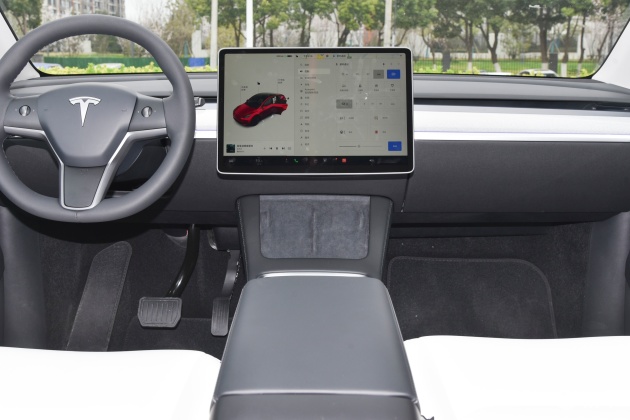
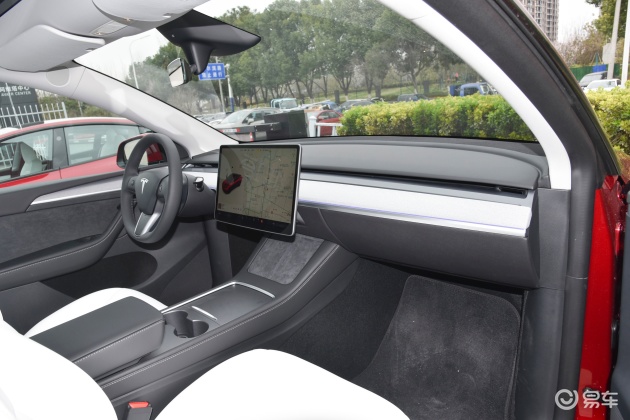
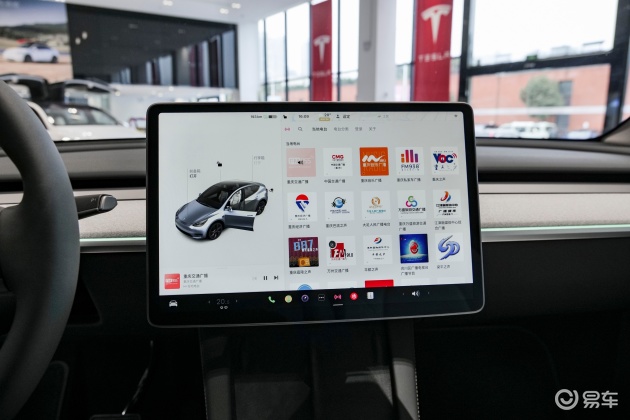
When I came into the car, the interior design of Model Y was more atmospheric and the visual effect was good. The car looks very good outside the steering wheel. It is made of genuine leather and everything looks very dignified. From the central control point of view, the car is decorated with a simple touch-control LCD central control screen, which makes the interior design quite layered and looks very fashionable. Finally, let’s look at the dashboard and seats. The car is equipped with a simple dashboard, which highlights the trendy temperament. The car adopts imitation leather seats, equipped with functions such as electric adjustment of auxiliary seats, electric adjustment of seats with memory, and seat proportion tilting, which makes it very comfortable to ride.

The Model Y is 357KW, the total torque is 659N.m, and the maximum speed is 250 km/h.

The car is equipped with driving mode selection, Bluetooth key, NFC/RFID key, interior ambient light, traction control (ASR/TCS, etc.), Bluetooth /WIFI connection and other configurations, which are rich in functions and greatly enhance its convenience.

Summary of the full text: SUV this model looks atmospheric, spatial performance is also good, cost-effective, I wonder if you are interested in it.

The time and difficulty coefficient of the senior high school entrance examination are announced! The latest notice of Hangzhou Education Bureau

  On April 21st, Hangzhou Education Bureau issued the Notice on the Enrollment of Various High Schools in Hangzhou in 2023. In 2023, the junior high school level examination in Hangzhou (referring to Shangcheng District, Gongshu District, Xihu District, Binjiang District, Qiantang District and Xihu Scenic Area, the same below) includes the cultural examination and the physical education examination, in which the cultural examination is held on June 17th and 18th, and the difficulty coefficient of each subject paper is controlled at about 0.75. Let’s look at the specific content together.

  First, the enrollment target

  Junior high school graduates who meet one of the following conditions can apply for all kinds of high schools in urban areas:

  (a) the 2023 junior high school graduates or previous graduates registered in Hangzhou.

  (2) Students of the graduating class of 2023 or previous graduates of junior high schools in Hangzhou City who are not registered in Hangzhou City, Hong Kong, Macao and Taiwan, or of foreign nationality in Zhejiang Province.

  (three) children of migrant workers from other provinces who meet the requirements of urban registration. Among them, the graduating class of 2023 students studying in junior high schools in Hangzhou must have three consecutive years of study experience and student status in junior high schools in Hangzhou, and their parents or one of them (or legal guardians, the same below) have a legally stable occupation and a legally stable residence (including lease) in the urban area and have participated in social insurance for at least one year in the past three years in accordance with state regulations; Previous graduates must meet the requirements for urban registration in the year when they graduated from junior high school.

  (4) Children of high-level talents, innovative and entrepreneurial talents who meet the requirements of the Opinions of the Municipal Party Committee and the Municipal Government on the Introduction and Training of High-level Talents, Innovative and Entrepreneurial Talents and Teams in Hangzhou (No.2 [2015] of the Municipal Party Committee) and can apply in urban areas; Children of high-level talents introduced by subordinate units in Hangzhou Province as recognized by the Talent Office of the Provincial Party Committee; After studying and graduating from junior high school in Hangzhou, one or both parents hold the children of imported talents issued by the urban public security organs, such as the Residence Permit for Imported Talents in Zhejiang Province, the Certificate of Specially Invited Experts in Hangzhou, and the Residence Permit for Overseas High-level Talents in Zhejiang Province, which belongs to Hangzhou.

  Students enrolled in all kinds of high schools are not allowed to apply.

  Second, the enrollment plan

  According to the principle that all urban junior high school graduates can be promoted to senior high schools and general vocational education can develop harmoniously, the enrollment plans of all kinds of senior high schools in urban areas are compiled. For the enrollment plans of high schools, please refer to the "Guide for Applying for Various High Schools in Hangzhou in 2023".

  Note: The Municipal Education Bureau will continue to compile the relevant information of the urban senior high school entrance examination into the "Application Guide" and distribute it to every candidate free of charge at the end of April.

  Third, the comprehensive quality evaluation

  The comprehensive quality evaluation of junior high school graduates shall be carried out according to the Notice of Hangzhou Education Bureau on Further Improving the Comprehensive Quality Evaluation of Junior High School Students in Hangzhou (Hangzhou Jiaochu [2012] No.1), and the comprehensive quality rating and conduct rating in comprehensive comments shall be taken as the preconditions for all kinds of high school enrollment.

  Fourth, the junior high school level examination

  (a) the junior high school level examination mainly measures the degree to which students meet the learning requirements stipulated by the state, and the examination results are the basic basis for students to graduate and enter higher schools. Students in junior high school graduating classes are required to take the academic proficiency test.

  (two) the junior high school level examination includes cultural examination and physical examination. The cultural examination will be held on June 17th and 18th, 2023, and the physical education examination will be held from April to May, 2023.

  (3) The subjects, examination forms, answer time, full marks and scoring methods of the junior high school level examination are as follows:

  (four) the proposition work of the junior high school level examination is organized and implemented by Hangzhou Education Examinations Institute and Hangzhou Basic Education Research Office. Further improve the quality of senior high school entrance examination questions, based on the subject Curriculum Standard, focus on promoting students’ core literacy, strengthen the connection between test questions and social reality and student life, and pay attention to examining students’ disciplinary thinking ability and problem-solving ability in real situations. Taking into account the needs of students’ graduation and further studies, strictly prevent the problems of off-topic, strange questions and exceeding the curriculum standards, and control the difficulty coefficient of test papers in various disciplines at around 0.75. The technical support for the examination, marking and enrollment of junior high school academic level examinations is organized and implemented by Hangzhou Education Examinations Institute.

  (five) the scientific experiment test of the fresh graduates of urban junior high schools shall be organized and implemented by the school where they are located, and the results shall be evaluated according to whether they are qualified or unqualified; The tests of music, fine arts, comprehensive practical activities and other disciplines are organized and implemented by junior high schools, and the results are included in the evaluation of students’ comprehensive quality.

  V. Enrollment and Admission

  (a) all kinds of high school enrollment work adhere to the principle of fairness, justice and openness, and actively improve the enrollment mode of high school based on the examination results of junior high school level and comprehensive quality evaluation.

  (II) All kinds of high school enrollment work shall be carried out in the order of four stages: pilot enrollment of integrated training of secondary vocational schools and application-oriented undergraduate courses (hereinafter referred to as "pilot enrollment of integrated training of secondary vocational schools and application-oriented undergraduate courses"), quota allocation enrollment, independent enrollment and centralized and unified enrollment. Students who have been enrolled in the previous stage will no longer enter the subsequent stage of enrollment.

  1. The integration of the pilot enrollment

  According to the spirit of the relevant documents of Zhejiang Provincial Department of Education on the pilot enrollment of this integration, the enrollment is conducted in the unified pilot enrollment platform of this integration in the whole city according to the "parallel volunteer" admission method.

  2. Quota allocation and enrollment

  Provincial-level key ordinary high schools, provincial-level ordinary high school characteristic demonstration schools and their branch schools recruit students for quota allocation. Among them, the enrollment ratio of provincial key ordinary high schools is 60% of the school enrollment plan; The enrollment ratio of the campuses set up by provincial-level key ordinary high schools, the branch schools led by them, and the provincial-level ordinary high school characteristic demonstration schools is 40% of the school enrollment plan.

  Quota allocation recommended students are recommended by junior high schools in equal amounts before the academic level examination. After the academic proficiency test, the enrollment school will allocate recommended students according to the total score of the academic proficiency test (including extra points), and select the best students from high scores to low scores according to the requirement of not less than 95%.

  3. Self-enrollment

  The implementation of independent enrollment in senior high schools should formulate relevant categories of independent enrollment implementation plans, and report them to the Municipal Education Bureau for the record before implementation. The categories of self-enrollment are:

  (1) Self-enrollment with special features

  There are three categories of self-enrollment with special features, including special students, special classes included in self-enrollment and Sino-foreign cooperative education projects. Candidates choose one of the three categories to apply for a school, and they are not allowed to apply at the same time.

  Before the academic level examination, the specialty independent enrollment is first tested by the enrollment school. Candidates who sign up for the relevant school’s specialty independent enrollment technical test (professional level) and pass the test are deemed to have completed the filling of the reported specialty independent enrollment volunteers. After the academic proficiency test, the enrollment school will assess and admit students according to the test scores of technical subjects (professional level) and academic proficiency test scores (excluding extra points), and the academic proficiency test scores will account for no less than 30%.

  (2) Independent enrollment in secondary vocational schools.

  According to the orientation and professional characteristics of running a school, secondary vocational schools can enroll students independently in a separate plan after application and approval. Candidates can choose 1-6 professional volunteers from a secondary vocational school in the schools and majors that enroll themselves independently.

  Before the academic proficiency test, the secondary vocational school enrolls students independently by the enrollment school for professional adaptability test. Candidates who sign up for the adaptability test of the independent enrollment major of the relevant school and pass the test are deemed to have completed the reporting of the voluntary enrollment of the reported school (major). After the academic proficiency test, the enrollment school will calculate the total assessment score according to the professional adaptability test scores and academic proficiency test scores (excluding extra points) according to a certain weight (of which the academic proficiency test scores account for 90%), and according to the candidates’ volunteers and the total assessment scores, they will be admitted according to the "parallel volunteer" admission method.

  The above two categories of independent enrollment are conducted in the order of independent enrollment with special features and independent enrollment in secondary vocational schools. Students who have been enrolled with special features will no longer enter the admission of independent enrollment in secondary vocational schools.

  4. Centralized and unified enrollment

  Centralized and unified enrollment will be conducted after the admission of independent enrollment. Centralized and unified enrollment is carried out in three batches: the first batch, the second batch and the third batch.

  (1) the first and second batch of enrollment

  The enrollment of provincial key ordinary high schools, provincial ordinary high school characteristic demonstration schools and their leading branch schools (including ordinary high schools in Xiaoshan, Yuhang, Linping, Fuyang and Lin ‘an districts with equal enrollment for urban areas) is the first batch of enrollment, and the enrollment of other schools (including ordinary high schools, vocational high schools, technical schools and technical secondary schools, the same below) is the second batch of enrollment. The overall enrollment of private ordinary high schools outside the urban areas approved by the provincial and municipal education administrative departments for urban areas is included in the second batch of enrollment.

  The first and second batch of enrollment and admission shall be conducted by filling in the above two batches of enrollment wishes at one time before the junior high school level examination and by the way of "parallel volunteer". There are 8 parallel volunteer for the first batch of enrollment and 20 parallel volunteer for the second batch of enrollment. Candidates can fill in at most 8 and 20 schools (majors) with parallel relationship respectively. After the exam, they will be admitted according to the rules of "giving priority to scores and following volunteers" and according to the total scores (including extra points) and volunteers of the candidates’ junior high school academic level exam.

  The enrollment of some characteristic classes in schools included in the first and second batch of enrollment adopts the following methods: first, the technical test, in which qualified candidates fill in the volunteers of corresponding characteristic classes (filled in at the same time as the first and second batch of volunteers), and after the junior high school proficiency test, according to the total scores (including extra points) and volunteers of the candidates in the junior high school proficiency test, they will be included in the corresponding batch and admitted as "parallel volunteer".

  (2) The third batch of enrollment

  After the first and second batch of enrollment, the unfinished enrollment plan of the enrollment school will be included in the third batch of enrollment.

  The specific implementation measures for the above enrollment shall be formulated separately.

  (C) Pre-conditions for all kinds of high school enrollment.

  Fresh graduates from urban junior high schools who have been promoted to provincial key ordinary high schools, provincial ordinary high school characteristic demonstration schools and their leading branches must be qualified and above in their comprehensive comments, and all six comprehensive quality grades must be qualified (P, etc.), and among them, three or more excellent (A, etc.) items have been obtained, and junior high school graduates have passed the scientific experiment test.

  Graduates from urban junior high schools who have entered the five-year class of "integration of secondary vocational schools and higher vocational schools" must pass all six comprehensive quality grades (P, etc.) and above; Students admitted to other schools and majors must be qualified (P, etc.) and above in the comprehensive quality rating.

  VI. Other matters

  (a) students are admitted to the school according to the prescribed procedures, and shall not be required to give up the admission results, and other enrollment schools shall not be admitted again. The transfer of students who have been admitted shall be implemented in accordance with the Measures for the Administration of Student Status of Primary and Secondary School Students in Zhejiang Province (Zhejiang Jiaoji [2022] No.18).

  (2) All enrollment schools, especially private schools, should charge fees in strict accordance with the approved charging items and standards, and shall not raise the charging standards without authorization, and shall not set up separate charging items, and shall not charge students any donation fees and equipment linked to admission. All senior high schools should standardize the management of student status, and it is strictly forbidden to link up with student status, so as to achieve "consistent citizenship".

  (3) The education administrative departments of all districts and high schools and junior high schools should strengthen the leadership of all kinds of high school enrollment related work, further improve the relevant systems, adhere to and improve the publicity system and supervision system, put an end to violations of discipline and discipline, and ensure the smooth implementation of the examination enrollment work.

  (4) The education administrative departments of all districts, relevant units and schools should strengthen the publicity of all kinds of high school enrollment policies, so that the majority of candidates and parents can understand the relevant policies and requirements in time, respond to the concerns of the society and parents in time, and take the initiative to accept the supervision of the society and the media. All senior high schools should standardize the enrollment and publicity behavior, and create a good atmosphere for the smooth implementation of all kinds of senior high school enrollment work.

  The Hangzhou Municipal Education Bureau will announce the specific implementation measures for the enrollment of all kinds of senior high schools in urban areas next week. For relevant information, please refer to the announcement of Hangzhou Education Network (edu.hangzhou.gov.cn) and the official WeChat "Hangzhou Education Publishing" of the Municipal Education Bureau.

Promoting grid management in Baiyun District, Guangzhou: small things don’t go out of the grid and big things don’t go out of the community.

Through refined management, the living environment of Dayuan Village has been significantly improved.

Through refined management, the living environment of Dayuan Village has been significantly improved.

Sheriff Grid helps residents find their lost children.

Sheriff Grid helps residents find their lost children.

  In Baiyun District, Guangzhou, grid management construction is in full swing. People were pleasantly surprised to see the figure of a grid worker in front of their house. With a phone call, a WeChat and a call, grid workers appeared beside the residents, regardless of the size of the incident.

  "The people think, I have a plan, the people have a call, I have a response, the people have a request, and I have something to do." On the 795.79 square kilometers of Baiyun land, 3,075 grids were finely divided, and 3,215 grid workers worked intensively on their respective grids, realizing the fine management of the city with the spirit of embroidery.

  A branch is built on the grid, and contradictions are resolved at the grassroots level.

  Dayuan Village, Taihe Town, Baiyun District, covers an area of about 25 square kilometers. There are 6,438 buildings in the village, including more than 3,600 rented houses, with an actual service management population of over 170,000. There are 7 large-scale logistics parks under its jurisdiction, which is a well-known "Big Mac" village and a famous "Taobao Village".

  In this "Big Mac" village, the traditional village-level governance model has obviously lagged behind, and the difficulties and pain points of social governance are prominent. However, since 2019, the police situation of theft in Dayuan Village has decreased by 41.7% year-on-year, and the police situation involving pornography, gambling and drugs has decreased by 22.6% year-on-year. How did this happen?

  "There are 2,409 party member in Dayuan Village, so we thought, can these red forces be transformed into the driving force and engine of village community governance?" Peng Zhiliang, the first secretary of Baiyun District stationed in Dayuan Village, introduced that Dayuan Village adopted a new service management model of "Party Building+Grid" in the exploration, that is, according to the characteristics of different regions, 111 basic grids were scientifically divided in the village, and combined with 212 party member responsibility areas, party member’s responsibility was unified with grid management, and a "Party Committee — Party branch — Grid — Party member "four-level management structure.

  Relying on the grid unit, the party building, rental housing management, municipal sanitation, comprehensive management and stability, comprehensive law enforcement and other teams of Taihe Town in Dayuan Village will be brought together to the village party committee for unified deployment and management, and the cadres and staff of party member at the town, village and economic society will flow to the grid, resources will be concentrated to the grid, all kinds of services will land in the grid, and mass problems will be solved in the grid.

  The interests of the masses are no small matter. Some people have damaged roads in front of their houses, smelly garbage collection, and inadequate compensation for fruit trees … … Party member and grid workers from Dayuan Village were dispatched in unison to try their best to solve the difficulties and pain points of the villagers. On July 25th this year, Lin Yongqing of party member went door to door with the 99th grid worker in the hot summer, and found a tanker carrying and unloading oil in an inconspicuous residential building. Lin Yongqing quietly reported the information, and the relevant departments rushed to the scene after receiving it. After being confirmed as an illegal refueling den, they immediately dealt with the refueling equipment.

  Remain true to our original aspiration, and keep our mission firmly in mind. Dayuan Village leads the grid management mode with party building, and continuously expands the ways and means for people from Guangzhou to participate in social governance through the joint meeting system of party building and the co-governance Council. Under the overall arrangement of the Political and Legal Committee of the District Committee, the experience of popularizing the "five strengths" of Sanyuanli Street Grid has taken root in Dayuan, and the "five strengths" have been used to create a pattern of co-construction, co-governance and shared social governance, providing inspiration for the reform and innovation of grassroots governance in the city.

  B grid "five long" micro-governance streets glow with new vitality

  The Zoumagang Railway Community, located in Sanyuanli of Baiyun, is a well-known "messy place", and many original residents have moved out because of the bad environment. Recently, however, there are more and more relocated households in the community, and dozens of families have moved back to the railway community.

  It turns out that Sanyuanli Street in Baiyun District piloted the grid "five long" micro-governance model from the first half of this year, "‘ Wu Chang ’ Not five people, but five teams. " Li Zhijun, deputy director of Sanyuanli Street Organization Office, told reporters that the "five leaders" are led by the party group leader, the grid leader is responsible, the deliberation leader cooperates, the building leader participates, and the sheriff guarantees. As of September this year, the "five long" teams of 156 grids in Sanyuanli Street have collected more than 1,400 problems and solved more than 1,300 problems, with a solution rate of over 90%.

  The child was accidentally lost, and the "five long" personnel immediately helped find it; The balcony found a hornet’s nest, and the "five long" personnel immediately invited firefighters to deal with it; The elderly living alone are sick, and the "five leaders" and doctors come to the door for treatment … … These are all practical things done for community residents after the implementation of the "five long" micro-governance work of Sanyuanli Street Grid, and the vision of "small things don’t leave the grid, big things don’t leave the community" has been truly realized.

  On August 5th this year, Ziyuangang Community Neighborhood Committee received a banner printed with the words "selfless assistance from the people". Ms. Ye, who came to send the banner, was very excited to express her gratitude to the community neighborhood Committee: "We are both crying. Fortunately, we have your help, otherwise I really don’t know what to do. Thank you very much!" It turns out that Ms. Ye is a businessman in Yifa Leather City within her jurisdiction. On the afternoon of August 3, she ran to the community duty room in a hurry and told the staff with tears that her two-year-old twins were accidentally lost because she was busy with business. After understanding the situation, Lu Ermin, the director of the community neighborhood committee on duty that day, asked the security team members to collect monitoring and search at the first time, and at the same time sent the information of finding children to the WeChat group of the "Five Long" team, and launched the leather goods business circle and community security forces to help find them together. Finally, in just one hour, she helped Ms. Ye find the two lost children.

  Grid "five long" micro-governance not only solves the practical problems encountered by residents in their lives, but also provides intimate convenience services for residents and opens up the "last mile" of serving the masses. There are many widowed and solitary elderly people living in Songbaigang community. Facing this special group, the "Five Long" team took the initiative to become caring people for the elderly living alone. Du Apo, an elderly person who lives alone in Songbai New Village, has no children under her knees. The grid leader of the community started to be Du Apo’s "children", not only caring for her in her daily life, but also cooperating with doctors in community health service centers to carry out on-site service, measuring blood sugar and blood pressure for Du Apo free of charge, and using the policy of benefiting the people to establish a health file for Du Apo, and providing family doctor-style signing service, so that Du Apo no longer has to worry about seeing a doctor.

  Nowadays, in the grid WeChat group of Sanyuanli Street, various "emergency" appeal messages pop up every day. The "Five Long" team insists on daily patrol, frequent visits, timely notes, handy work and real-time transmission, and quickly sends the collected clues of social conditions and public opinion to the group, so as to resolve contradictions in the bud and solve problems in the initial stage.

  C enhancing people’s happiness with the spirit of embroidery

  According to the statistics of Guangzhou Municipal Bureau of Statistics, the registered population of Baiyun District is only 943,600, while the permanent population is as high as 2,441,900, which makes Baiyun District rank first among all districts in Guangzhou. The influx of foreign population makes it urgent for Baiyun District to realize fine urban management. Since the beginning of this year, the Political and Legal Committee of Baiyun District Committee has taken the lead in optimizing and upgrading grid service management in the whole region.

  In April this year, the Political and Legal Committee of Baiyun District Committee, together with the Baiyun Branch of the Municipal Planning and Natural Resources Bureau and other departments, began to re-divide the basic grids of towns and streets in the whole region, using the latest and most authoritative maps and special vector drawing software to completely eliminate the unreasonable grids of towns and streets.

  After adjustment, 18 streets in 4 towns in the whole district are divided into 3075 basic grids, and 3215 basic grid members perform their respective duties. It also simplified the original 201 items into 50 items in 10 categories, and clearly defined the responsibilities of grid workers and functional departments.

  The front-end problem was successfully solved, followed by the optimization of the rear platform. The original platform function was very rough, but now the new platform is adding functions such as trajectory tracking, performance management, data statistics, etc. Grid members report grid events in real time in the grid through the mobile APP "Digital Baiyun Basic Application Platform" during inspection, and the background is in accordance with "Event sending → Dispatch → Event acceptance → Event handling → Result feedback → The evaluation and closing process is completed, and the whole process is closed in the platform, which truly realizes the "responsive" grid operation mechanism.

  Strengthen team management and greatly improve the grid service management ability. After the previous grid foundation work was consolidated, Baiyun District took advantage of the trend to improve the grid management pattern, and promoted the grid "five long" micro-governance model in the whole region, giving full play to social forces and realizing "small things don’t leave the grid, big things don’t leave the community". At present, on the basis of 3075 grids and 3215 grid members, the whole region has set up a grid "five long" team of 16595 people.

  In order to do a good job in grid management, leaders at all levels attach great importance to it. From January to August this year, a total of 384,779 grid events were reported in Baiyun District, and 384,115 were settled, with a settlement rate of 99.8%. Correspondingly, the residents’ sense of acquisition, happiness and security in Baiyun District have improved significantly. As of August 30, the police situation of Baiyun Branch decreased by 11% year-on-year; The police situation of the two robberies decreased by 57.8% year-on-year; Burglary alarm decreased by 50.6% year-on-year.

  In the eyes of the masses, the cleanliness of the environment and the improvement of public security are tangible and tangible. "The people’s yearning for a better life is our goal!" This sentence may be a vivid footnote for Baiyun District to study the spirit of embroidery and implement fine grid management. (Text/Figure Song Wei Wen Jing Yun Xuan)