Xinhua All Media+One Minute Understanding Typhoon
Xinhua News Agency, Hangzhou, August 3rd (Reporter Xu Shunda) This year, Typhoon No.5 "Sanda" and Typhoon No.6 "Cuisi" were successively generated. Meteorological analysis pointed out that there was still a typhoon brewing in August. How is a typhoon formed? What preparations do residents need to make before the typhoon comes? How to avoid danger when a typhoon comes? The reporter specially consulted meteorologists to carry out popular science.
Ruan Xiaojian, deputy director and senior engineer of Zhejiang Meteorological Propaganda Science Center, said that typhoons were formed in tropical oceans. It has strict requirements on the water temperature of the sea surface, and the sea surface temperature should reach at least 26.5℃. The warm and wide ocean surface contains huge energy, which provides conditions for the formation of typhoons. Under the irradiation of the sun, warm seawater forms a strong cumulonimbus cloud over the sea surface and develops continuously. The expanding cumulonimbus cloud cluster is influenced by the geostrophic deflection force and rotates counterclockwise to form a tropical cyclone.
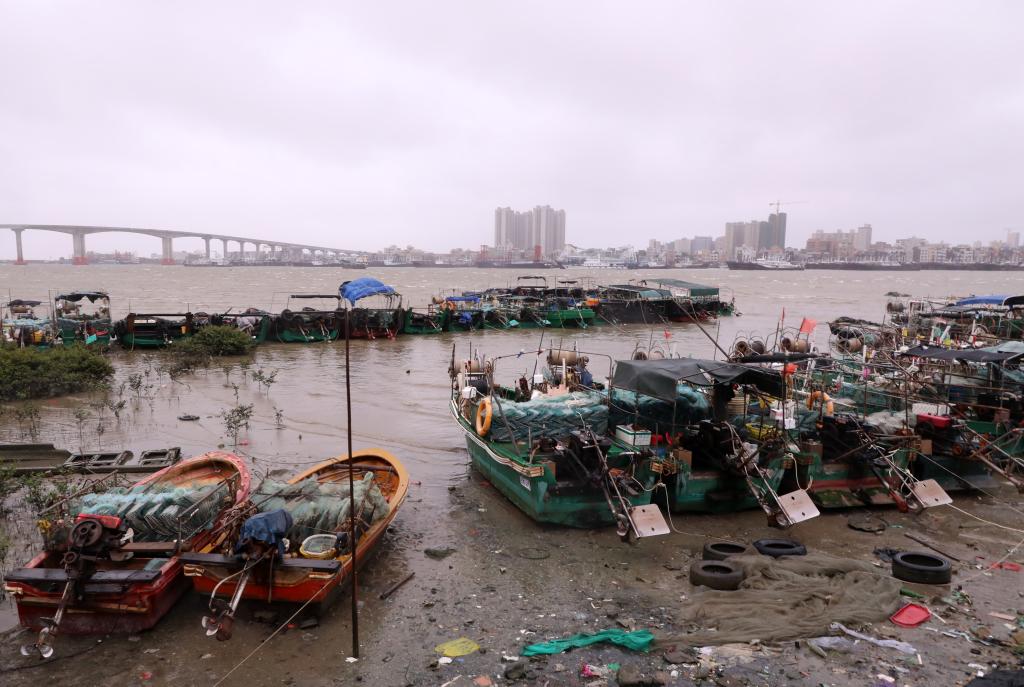
On July 2 this year, Typhoon Siam landed in Dianbai coastal area of Maoming City, Guangdong Province. The picture shows a fishing boat docked near Bohewan Bridge in Dianbai District of Maoming City. Xinhua News Agency reporter Huang Guobao photo
According to meteorologists, when tropical cyclones develop and reach a certain intensity, they are called typhoons in the northwest Pacific and hurricanes near North America. Near the low latitude in East Asia, typhoons usually travel west or northwest after being generated, and may turn northeast after reaching a certain latitude, which depends on the game results of various weather systems. The strong subtropical high has the greatest influence on the typhoon track.
"Although typhoons No.5 and No.6 were generated one after another this year, due to congenital deficiency and the strong subtropical high, the two typhoons weakened and dissipated on the sea surface in the near future." Ruan Xiaojian said. According to the situation of typhoon generation all the year round, August will be the month with the largest number of typhoons in a year, with an average of 5.7 typhoons. From 1949 to 2019, there were 130 typhoons that landed in China in August. In the first ten days of August this year, tropical disturbances in the South China Sea and the Northwest Pacific tend to be active, and there may be one or two typhoons.
The main disasters caused by typhoon are rainstorm, strong wind and storm surge. As a country affected by many typhoons, almost every summer, residents in coastal provinces will pay close attention to the typhoon trend nervously, and all departments are ready.
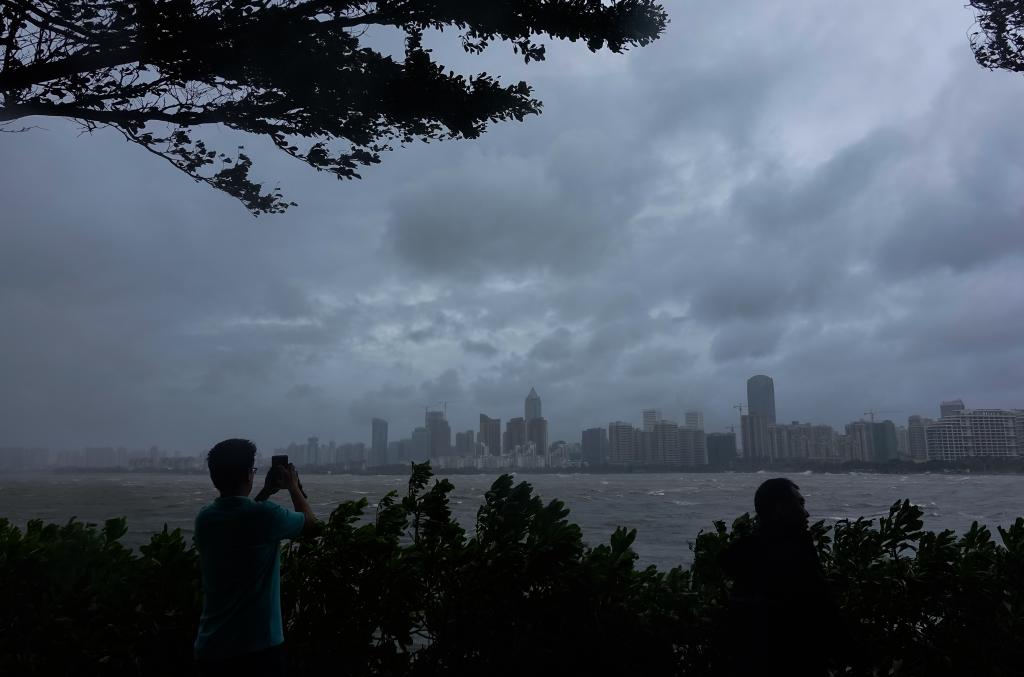
On October 13, 2021, citizens photographed the landing of typhoon Compass on the central coast of Poly, Haikou City. Xinhua News Agency reporter Yang Guanyu photo
Meteorologists suggest that before the typhoon comes, residents should listen, watch or check the typhoon forecast and early warning information online in time; Reserve food and water, and prepare emergency items such as mobile power supply and flashlight; Check whether the circuit, fire, gas and other facilities are safe; Residents living in all kinds of dilapidated houses, factories and sheds should be moved to safety in time; Residents in coastal areas had better stick a "meter" pattern on the window glass with adhesive tape to prevent the window glass from being broken.
When the typhoon comes, it is necessary to continue to pay attention to the dynamic information of the typhoon and minimize going out. If you are outside, don’t take shelter from the wind and rain near temporary buildings, billboards, iron towers and trees. If you live in a tent, you should immediately put away your tent and take shelter from the wind in a solid house; If you are on the water (such as swimming), you should immediately go ashore to take shelter from the wind and rain.
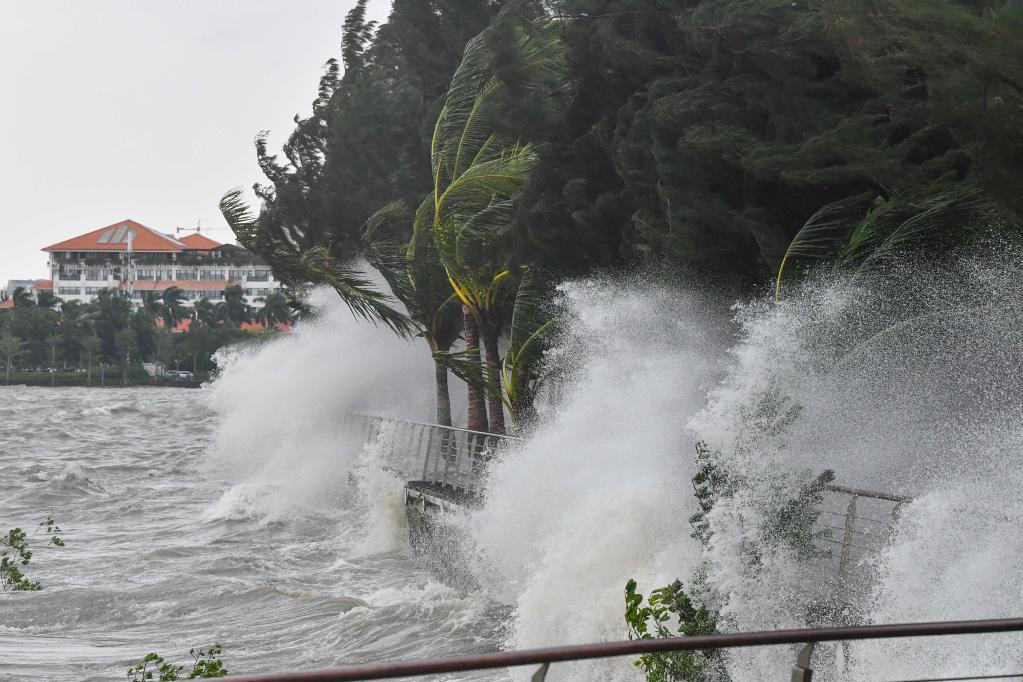
On October 13, 2021, on the eve of typhoon Compass landing, the wind and waves were photographed in Haikou Bay, Haikou City. Xinhua News Agency reporter Pu Xiaoxu photo
In addition, Ruan Xiaojian said that typhoons are not without merit. For China’s coastal areas, typhoon precipitation is an important source of water supply in midsummer. "For the typhoon, we still can’t interfere with its formation and movement. What we can do is to actively respond scientifically, seek advantages and avoid disadvantages, and minimize disaster risks. "