Three elements of social products: relationship chain, interaction and content.

No matter what kind of social product it is, its ultimate goal is to help users build links. Since the development of social products, the form has matured. Among them, relationship chain, interaction and content are the core elements of social products. This paper analyzes these three key elements, hoping to bring you some inspiration.

After working in an outsourcing company for more than two years, I joined a startup company and started my own exploration in the social field as the head of its overseas social application. In the following time, I will summarize my exploration experience in writing regularly and share it with you.

I’m not very knowledgeable. I hope everyone can learn something from it.

If we want to make a good social product, there is no doubt that the first thing we need to know is: What is social?

According to the definition of Baidu Encyclopedia, socialization (that is, social communication) refers to the social activities in which individuals communicate with each other for material and spiritual exchanges under certain historical conditions.Because the essence of animal society is the sum of all social relations formed on the basis of material production and labor, social communication is the inherent requirement of animal nature to a certain extent.

In the past, people’s social activities included offline salons, blind dates and even chatting among friends, and the Internet brought new social ways, and social products such as WeChat, Soup and soul emerged one after another. People have met their needs for material, information and spiritual communication in various ways.

However, just as a successful person owns a house and a car, we cannot define that success equals a house and a car.Whether it is the exchange of materials or the exchange of information and spirit, it is only the appearance of social interaction to a certain extent. I think the essence of social interaction is linking.. Based on the link, one person, a group of people, established contact with each other, thus having the possibility of exchange.

At the same time,The formation of links is limited and influenced by time and space. Based on different link subjects, media and forms, various types of social products that we are familiar with have emerged.

For example, distinguished by the main body of the link, it links the social application WeChat of acquaintances of relatives and friends, and links the social product soul; of strangers who have no contact with strangers; Differentiated by link media, there are interest-based social applications and LBS social products based on geographical location. In terms of form, there are audio social products Hertz, video social products HOLLA, cat call and so on.

butNo matter what kind of social product it is, its ultimate goal is to help users build links.

Relationship chain is one of the core elements of social products, which refers to the connection between people. The network formed by the combination of multiple relationship chains is what people often call relationship network.What is human nature? Marx concluded that "the essence of human beings is not an abstract thing inherent in a single person, but in reality, it is the sum of all social relations". In our daily life, no one can get rid of "relationships". Relatives, friends, classmates and partners have various relationships, strong and weak.

Different types of social products often have different entry points for the relationship chain.

Cut in with a strong relationshipWechat, which everyone is very familiar with, is a social product based on strong acquaintances, not only WeChat, but also most IM products such as WeChat and QQ. The key to acquaintances’ socialization lies in whether they can successfully transfer the offline relationship chain of users to online, thus making the communication between acquaintances more convenient. Once the relationship chain is successfully migrated online,The strong relationship between acquaintances is itself a very powerful moat for acquaintances’ social products.In my opinion, this is why it is difficult for new acquaintance social products such as Duoshan to shake the dominance of WeChat in the social field of acquaintances.

At present, there are still new social products coming into the market, such as soda and other products that I brushed recently when I brushed Tik Tok. Most of them areCut in from the perspective of weak relationshipSocial networking products for strangers. At present, the more successful social products for strangers in the market include Momo based on LBS, soul with three views matching as the selling point, Hertz with the main voice socialization, Douban with interest dimension, Post Bar and so on.Weak relationship is the starting point of strong relationship. Compared with strong relationship, the establishment cost and migration cost of weak relationship are much lower.This is why it is difficult for a monopoly giant like WeChat to appear in the field of strangers’ social interaction, and why there are always new products coming into the track of strangers’ social interaction.

butDue to the low credibility of weak relationships, most social products of strangers have to improve their credibility through various channels to realize the core value of the products.For example, social products with heavy value such as Momo and exploration will require users to authenticate with real people, while soul, which focuses on soul socialization, provides users with psychological test questions.

The strength of all relationship chains may fluctuate with time. For the same relationship, such as partnership, the feelings of couples who stay together every day may continue to heat up, and couples who have been separated from each other for a long time may become unfamiliar. The fluctuation of relationship strength is inseparable from the interaction between them.

Interaction is also the core element of social products.

Interaction refers to the process of interdependent behavior between individuals, groups and groups in society through language or other means to spread information.It takes two hands to clap, and one person can’t interact.

Users who establish relationships can interact, and the interaction between users in turn affects the stability and strength of the relationship chain. The key is thatInteractive mode, intensity, frequency and value..

Taking the common Internet social products as an example, in most products,Common interactive behaviors include chatting, liking, commenting and forwarding.And different interaction modes correspond to different interaction intensities. For example, the interactive intensity of comments is greater than that of likes. And the same is chat, the interactive intensity of video chat is generally greater than that of text chat.Under normal circumstances, the greater the intensity of interactive behavior, the easier it is to enhance the closeness of the relationship between users.

For the same kind of interaction, the higher the interaction frequency, the closer the general relationship. But this is not absolute, because whether user interaction is effective or not, there is also a very important key point, that is, the value of interaction.

There are a thousand cups of wine for every bosom friend, and more than half a sentence for lovers. In our daily life, we may encounter such a situation. For example, at work, some colleagues have worked with you for a long time, and you are still familiar strangers after work for a long time, while some people have become friends through a few supper after work, even though they have not known each other for a long time.The reason for this difference lies in the difference of interactive value.The communication with old colleagues may stop at work. These exchanges are conducive to the smooth development of work, but they can’t make you know each other better. However, chatting in different places during the string talks makes you have a basic understanding of each other’s hobbies and values, thus becoming friends.

Interaction is the key to the generation and change of the relationship chain between users, but a good interaction can’t happen out of thin air.When posting a comment, there must always be someone to comment on and chat with others. The key is to talk about what won’t lead to embarrassing chat.The key auxiliary information is the content.

Content is auxiliary information to help users interact, which refers to the information that users disclose to others.In the early days of the Internet, limited by the network technology and network speed, the content display among users was mainly in words, resulting in pure text social products such as BBS, blogs and IM tools. With the maturity of the processing technology of pictures and audio and video, various types of content such as pictures, audio and video began to participate in social activities in a richer form.

For any social product, the content supply chain is basically composed of three main links: content production, content distribution and content consumption, and how to optimize the content supply chain is particularly important for all social products.

To guide users to output valuable content, we can refer to the concept of value proposition in economics and encourage users to output content with internal or external value, which can be in the form of spatial dynamics, photo wall and so on.For products with sliding pairs such as tinder or Explore, they encourage users to upload more personal photos and update more real personal information, which belongs to the content produced by users. Of course, how to recommend suitable users to each other is what tinder and explorers need to consider in the content distribution. For products such as Tik Tok, Yikan and Weibo, which focus more on content socialization, besides personal data, they will try their best to let users publish more dynamic content, such as providing them with tools for editing pictures and videos, lowering the threshold for dynamic publishing, and providing material or spiritual incentives for high-quality content, thus encouraging users to produce content. With sufficient content sources, content distribution has become a top priority. For example, Tik Tok is famous in the Internet circle for its extremely powerful content recommendation algorithm.

Of course, we can’t be anticlimactic. On the consumption side of content, how to help users consume content better and encourage users to interact with content producers based on content is the key ending to complete the whole social closed loop.

In subsequent articles, I will further discuss the content supply chain, so I won’t expand it here for the time being.

This is the end of the article, hoping to play a role in attracting jade.

Aaron, WeChat official account: In Aaron’s cabin, everyone is a product manager columnist. Head of social products at sea, an internet observer who is keen on sharing.

This article was originally published in everyone is a product manager. Reprinting is prohibited without permission.

The title map comes from Unsplash and is based on CC0 protocol.

Weiyuan M5.4 Earthquake in Neijiang, Sichuan: It is unlikely that a bigger earthquake will occur in the earthquake area in the near future.

  China News Service, Neijiang, Sichuan, September 8 (Reporter He Yuqing, Liu Zhongjun) The reporter learned from the Sichuan Earthquake Administration on the 8 th that the comprehensive analysis of experts believes that the Sichuan Weiyuan M 5.4 earthquake belongs to a tectonic earthquake, which occurred near the Lijiachang fold in the southeast wing of Weiyuan anticline, and it is unlikely that a larger earthquake will occur in the earthquake zone in the near future.

  China Seismological Network officially determined that an earthquake of magnitude 5.4 occurred at 6: 42 on September 8 in Weiyuan County, Neijiang City, Sichuan Province (29.55 degrees north latitude and 104.79 degrees east longitude) with a focal depth of 10 kilometers.

  From the 5.4-magnitude earthquake in Weiyuan to 12: 00, 14 aftershocks of M2.0 and above were recorded locally. Among them, there was one earthquake of magnitude 4.0 to 4.9 and 13 earthquakes of magnitude 2.0 to 2.9.

  As of 14: 50 on the same day, the earthquake caused one death and 53 injuries; 49 towns and villages were affected by the disaster, with 1,133 people affected, 86 houses collapsed, 194 houses were seriously damaged and 2,098 houses were slightly damaged.

  The power communication in Longhui Town, Weiyuan County, the epicenter of the earthquake, was normal, and street shops were still open to welcome guests. Although the tranquility of this town was "broken" by the sudden earthquake in the morning, people’s lives seem to have not changed much.

  After the earthquake, Peng Qinghua, secretary of the Sichuan Provincial Party Committee, demanded that the earthquake disaster be quickly verified, that all efforts be made to treat the injured, that the affected people be properly transferred and resettled, and that the basic livelihood be effectively guaranteed. It is necessary to organize professionals to conduct safety assessment and appraisal of housing, and start reinforcement, maintenance and reconstruction work in time. It is necessary to immediately investigate the hidden dangers of geological disasters in the earthquake zone, ensure the safe and smooth infrastructure such as transportation, electricity, water conservancy and communication, and prevent new losses caused by secondary disasters. Yin Li, governor of Sichuan Province, led a working group and rushed to the earthquake site to guide the rescue work.

  Since 1900, there have been 8 earthquakes (including aftershocks) of magnitude 5.0 or above within 100 kilometers of the epicenter of this Weiyuan M 5.4 earthquake. Among these earthquakes, the largest one was the Mabian M5.5 earthquake in Sichuan on May 16, 1936 (about 100 kilometers away), the latest one was the M5.2 earthquake in Rongchang District of Chongqing on August 13, 1997 (about 75 kilometers away), and the latest one was the M5.0 earthquake in Zigong City, Sichuan Province on October 24, 1954, with a spatial distance of about 17 kilometers. (End)

@ 丫丫丫丫丫, please accept a warm reminder from the court.

"Double Eleven" It’s coming.

With "full reduction", "big promotion" and "pre-sale"

Various marketing methods are coming.

Ladies and gentlemen, while shopping happily,

Have you also encountered problems?

Please accept the gift from the court

A warm reminder of "Dian"

I wish you a pleasant journey.

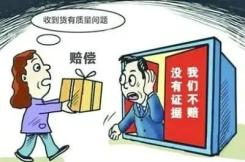
Where to sue for rights protection when encountering online shopping disputes?
Law express:

Article 23 of the Civil Procedure Law of People’s Republic of China (PRC): A lawsuit arising from a contract dispute shall be under the jurisdiction of the people’s court of the defendant’s domicile or the place where the contract is performed.

"the Supreme People’s Court on the application of

<中华人民共和国民事诉讼法>Article 20: In the case of a sales contract concluded through an information network, if the subject matter is delivered through the information network, the domicile of the buyer shall be the place of performance of the contract; Where the subject matter is delivered by other means, the place of receipt is the place where the contract is performed. Where there is an agreement on the place of performance in the contract, such agreement shall prevail.

Therefore, when an online shopping dispute occurs, unless there is an agreement between the buyer and the seller, the consumer can choose the court where the seller lives, or the court where the buyer lives or receives the goods.

"Double Eleven", the merchant of my online shopping shop asked for a "down payment". If I go back on my word after paying the down payment and don’t pay the final payment, can the down payment be refunded?
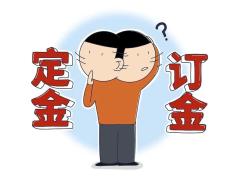
Deposit is a form of guarantee voluntarily agreed by the parties to the contract to ensure the performance of the contract. It is established when the deposit is actually paid. If the consumer who pays the deposit does not pay the final payment, he has no right to request the return of the deposit. On the other hand, if a merchant who has received the consumer deposit fails to perform the debt or the performance of the debt does not conform to the agreement between the two parties, it shall double the deposit.

In daily transactions, the terms deposit and deposit are widely used, but their nature is completely different. Deposit has the nature of guaranteeing the performance of the contract, but deposit is not a legal concept, but a idiom. Its purpose is to alleviate the cash flow shortage of the party receiving the deposit and thus enhance its performance ability.

Law express:

Article 586 of the Civil Code of People’s Republic of China (PRC) stipulates that the parties may agree that one party shall pay a deposit to the other party as a guarantee for the creditor’s rights. The deposit contract is established when the deposit is actually paid.

The amount of the deposit shall be agreed by the parties; However, it shall not exceed 20% of the subject matter of the main contract, and the excess shall not have the effect of deposit. If the actual amount of deposit paid is more than or less than the agreed amount, it shall be deemed as a change of the agreed amount of deposit.

Article 587th of the Civil Code of People’s Republic of China (PRC) stipulates that if the debtor performs the debt, the deposit shall be used as the price or recovered. If the party paying the deposit fails to perform the debt or the performance of the debt does not conform to the agreement, so that the purpose of the contract cannot be achieved, it has no right to request the return of the deposit; If the party receiving the deposit fails to perform the debt or the performance of the debt does not conform to the agreement, so that the purpose of the contract cannot be achieved, the deposit shall be returned twice.

After shopping, I accidentally found that the merchants displayed discounted goods during the Double Eleven period, but in fact the price was higher than the original price. How can I protect my rights?
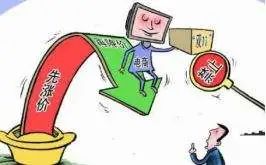
Merchants’ fictitious original price and quiet price increase are suspected of price fraud, and if the seller constitutes fraud, the buyer can ask for "one refund and three compensation". You can complain to the e-commerce platform where the merchant is located, or call the "12358" price reporting hotline and the "12315" consumer rights protection hotline to report. If similar goods have been purchased, consumers can defend their rights through arbitration and litigation.

Law express:

Article 14 of the Price Law of People’s Republic of China (PRC) stipulates that an operator shall not commit any of the following unfair price behaviors:

(1) colluding with each other to manipulate market prices and harming the legitimate rights and interests of other business operators or consumers;

(2) Dumping at a price lower than the cost in order to crowd out competitors or monopolize the market, disrupting the normal production and operation order, and harming the national interests or the legitimate rights and interests of other operators, in addition to handling fresh commodities, seasonal commodities and overstocked commodities at a reduced price according to law;

(3) fabricating and spreading information about price increases, driving up prices and pushing up commodity prices too high;

(four) using false or misleading price means to trick consumers or other operators into trading with them;

(five) to provide the same goods or services, and to discriminate against other operators with the same trading conditions;

(6) Buying or selling goods or providing services by means of raising or lowering the grade, and raising or lowering the price in disguise;

(seven) profiteering in violation of laws and regulations;

(8) Other unfair price behaviors prohibited by laws and administrative regulations.

The first paragraph of Article 55 of the Law on the Protection of Consumer Rights and Interests in People’s Republic of China (PRC) stipulates that if an operator commits fraud in providing goods or services, it shall increase the compensation for the losses it has suffered according to the requirements of consumers, and the amount of compensation shall be three times the price of the goods purchased by consumers or the cost of receiving services; If the amount of additional compensation is less than 500 yuan, it is 500 yuan. Where there are other provisions in the law, such provisions shall prevail.

The baby I bought was damaged or lost in the mail. How should I settle the claim? Who should bear the responsibility?
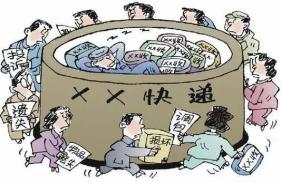
The seller sends the goods to the delivery place agreed by both parties through the courier company, and the goods are not delivered before the buyer signs for them. At this time, the seller still bears the risk of losing the courier. If the purchased goods are damaged in the mail, the consumer should take photos and leave a certificate at the first time when receiving the courier, and claim compensation from the seller in time. If the seller has carried out the corresponding packaging protection for the goods, he can negotiate with the courier company to settle the claim. If the negotiation fails, he can bring the corresponding evidence to court.

Law express:

Article 512 of the Civil Code of People’s Republic of China (PRC) stipulates that if the object of an electronic contract concluded through information networks such as the Internet is to deliver goods and the goods are delivered by express logistics, the time of receipt by the consignee is the delivery time. If the object of an electronic contract is to provide services, the time specified in the generated electronic certificate or physical voucher shall be the time for providing services; If the time is not specified in the above-mentioned vouchers or the time specified is inconsistent with the actual time of providing services, the actual time of providing services shall prevail.

The subject matter of an electronic contract is delivered by online transmission, and the time when the subject matter of the contract enters the specific system designated by the other party and can be retrieved and identified is the delivery time.

If the parties to an electronic contract have otherwise agreed on the way and time of delivering goods or providing services, such agreement shall prevail.

Article 604 of the Civil Code of People’s Republic of China (PRC) stipulates that the risk of damage or loss of the subject matter shall be borne by the seller before delivery and by the buyer after delivery, unless otherwise stipulated by law or agreed by the parties.

Is "seven days no reason to return" applicable to all kinds of goods?

There is no reason to return goods for seven days, which protects the rights and interests of consumers to the greatest extent and is also conducive to the development of e-commerce. However, it needs to be clear that "no reason" does not mean "unconditional". Not all goods are subject to the seven-day unreasonable return rule. The seven-day unreasonable return rule does not apply to goods classified as fresh and perishable. For the purpose of seeking benefits, it is not applicable to return goods for seven days without reason if online shopping is needed beyond the reasonable daily consumption. At the same time, "should be in good condition" is the prerequisite for returning goods for seven days without reason.

Law express:

Article 25 of the Law of People’s Republic of China (PRC) on the Protection of Consumers’ Rights and Interests and Article 7 of the Interim Measures for the Seven-day Return of Goods Purchased through the Internet stipulate that consumers who purchase goods online have the right to return goods within seven days from the date of receipt of the goods without giving reasons, but they need to meet the following conditions:

1. Within seven days from the date of receiving the goods;

Second, the goods do not belong to the following types: (1) ordered by consumers; (2) fresh and perishable; (3) Digital goods such as audio-visual products and computer software downloaded online or unpacked by consumers; (4) newspapers and periodicals delivered; (5) Other commodities that are not suitable for return according to the nature of the commodities and confirmed by consumers at the time of purchase.

Have you learned the above little knowledge

When people bought it in buy buy,

Be sure to be rational.

Especially when shopping online.

Pay attention to the collection and preservation of relevant shopping evidence!

Editor: Fei Lichun

Original title: "@ 丫丫丫丫丫丫丫丫, please accept a" code "warm reminder from the court"

Read the original text