On soliciting opinions on the draft labor contract law

From March 20th to April 6th at 8: 00 a.m, the Legislative Affairs Commission of the National People’s Congress Standing Committee (NPCSC) received a total of 37,560 opinions. Among them, 37,067 opinions were put forward through websites such as China People’s Congress Network, 100 opinions were published in newspapers such as People’s Daily and Legal Daily, and 393 letters were received. On March 27th, we announced to the media the first stage of the draft labor contract law for comments. From March 28th to April 6th, compared with the first stage, the number of opinions received increased significantly, which shows that all sectors of society attach importance to and pay attention to this law. In addition to continuing to put forward opinions on the scope of application of the draft, the short-term labor contract, the probation period and the standard of economic compensation, the opinions at this stage mainly reflect the following aspects:

First, the purpose of labor contract legislation should seek a balance between the rights and interests of workers and the rights and interests of enterprises. Some opinions suggest that law is the regulator of social relations and social interests, and any legislation is the allocation of rights and obligations and social interests. Legislators must find a combination point among multiple interest subjects and strive to find a balance of interests among various interest subjects, especially between the opposite parties in the same contradiction. As far as labor relations are concerned, the laborer is weak at any time. However, if legislation excessively expands the rights and interests of laborers and increases the responsibility of enterprises, it will bind the autonomy of employing people in enterprises, make it difficult to implement flexible management of survival of the fittest, affect the optimal allocation of human resources, and ultimately affect the market competitiveness of enterprises. "If the skin doesn’t exist, the hair will be attached." If the enterprise collapses, the workers will lose their jobs, and it is impossible to protect the rights and interests of workers. On the other hand, if the protection of workers’ rights and interests is not in place and there are too few requirements for corporate responsibility, it will affect the supply of labor force and is not conducive to the formation of a high-quality and healthy workforce. Therefore, labor contract legislation should establish a correct legislative concept, find an appropriate balance between citizens’ labor rights and interests and employers’ rights and interests, and ensure that labor relations are not unbalanced.

Two, in some cases, the existence of oral labor contracts should be allowed. The form of labor contract cannot be limited to written form. Now is the information age, and there are many forms of signing contracts. Labor contracts should be allowed to use electronic documents, oral contracts and other forms. As long as factual labor relations exist, they should be protected by law, and the emphasis on written forms may be detrimental to protecting the interests of workers. In particular, for part-time employment, employment with a short contract period or the contents of the contract have not changed much, it should be allowed to sign the contract orally.

Third, everyone has different views on the provisions of non-competition. Some people think that if the employer needs to keep business secrets, it can agree on non-competition when signing a labor contract with the employee, and at the same time agree with the employee to pay economic compensation for non-competition when the labor contract is terminated or dissolved. Some people think that the restriction of non-competition is not conducive to the flow of talents, and the termination of the labor contract means that the workers will lose their jobs, so it is suggested to cancel the restriction of non-competition. Some people think that the standard of liquidated damages for non-competition in the draft is too low, which will inevitably lead to the consequences of malicious poaching between enterprises in the same industry; Some people think that the economic compensation paid by the employer is too high, and it is suggested to refer to the non-competition clauses of other countries and modify the economic compensation to 50% of the annual wage income. If the laborer violates the non-competition restriction, in addition to paying liquidated damages, he should also pay compensation if he has caused economic losses to the enterprise.

Four, some people think that the provisions of the draft on the conclusion of a labor contract without a written form may be abused. If this provision is made, some workers may deliberately not sign a labor contract with the employer to achieve the purpose of signing an open-ended labor contract. It is suggested that the situation of not concluding a labor contract in written form should be clarified. Some people also think that this provision will use the employer to apply an open-ended labor contract in disguise without signing a written labor contract deliberately to achieve the purpose of arbitrarily dissolving the labor contract. Because according to the provisions of article 32 of the draft, the employer is subject to fewer restrictions when it terminates the open-ended labor contract. It is not conducive to achieving the original intention of stabilizing labor-employment relations and effectively protecting the legitimate rights and interests of workers.

Five, the labor contract law shall limit the overtime work of the employer. Many workers report that some enterprises now work overtime regularly and universally. Some workers work more than ten hours a day, six days or even seven days a week, and there is no overtime pay. Some enterprises calculate overtime when determining the workload, and they can’t finish the work quota without overtime, so as to maliciously avoid paying overtime, which seriously damages the rights and interests of workers and affects their health.

Six, the draft should make a special chapter on collective contracts. Some trade union organizations and the masses have suggested that a collective contract is an agreement on the rights, responsibilities and obligations of both employers and employees. Collective contract is the basis of labor contract and the soul of labor contract law. The practice in many countries has proved that the collective contract is an effective measure to ensure the workers’ negotiating status, and it is also the cornerstone to stabilize labor relations. At the present stage, when the supply and demand of labor force in China are unbalanced and workers are in a weak position, the measure to coordinate labor relations and make them harmonious is to promote and standardize collective contracts. Therefore, while legislating to standardize the labor contract, we should also standardize the collective contract. At present, it is difficult to introduce the collective contract law, so we should make a special chapter on the collective contract in the labor contract law.

Seven, the legislation should be clear about the supervision responsibility of the labor and social security department on the labor contract. Many problems in labor relations are not that there is no law, but that the law is not enforced. The provisions of the labor law have been relatively comprehensive, but problems such as arbitrarily terminating labor contracts, defaulting on wages, and not giving employees social insurance still occur in practice, indicating that the law has not been implemented well. There are laws that are not enforced, and no matter how good the laws are, it is useless. Some opinions suggest that law enforcement agencies should be given more effective law enforcement power, and at the same time, it is clear that safeguarding the rights and interests of workers is the statutory duty of the labor security department. If the labor department fails to perform its statutory duties, it should bear corresponding legal responsibilities. The provisions of the draft on the responsibility of labor and social security departments are not clear enough, so it is suggested that legislation should make clear provisions on this.

Eight, continue to discuss the issue of labor dispatch, put forward opinions and suggestions. Some suggestions should further regulate labor dispatch. First, improve the entry threshold of labor dispatch; The second is to clarify under what conditions, in which positions and types of work, the employer can use the form of labor dispatch; The third is to clearly divide the responsibilities of labor dispatching units and receiving units; Fourth, clearly stipulate the time limit for labor dispatch, and prohibit employers from using dispatched labor for a long time; Fifth, strict legal responsibility should be imposed, and severe punishment should be imposed on the labor dispatching unit and the receiving unit for shirking each other or maliciously colluding to infringe upon the legitimate rights and interests of workers.
(Provided by the National People’s Congress Standing Committee (NPCSC) Legal Affairs Committee)

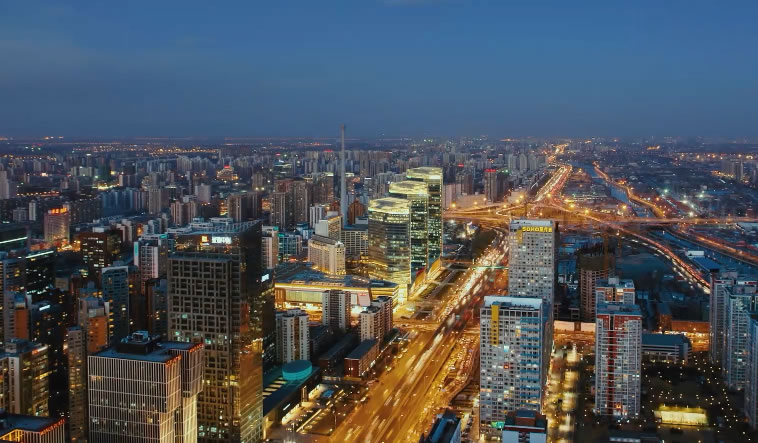
The mayor of Beijing sent an invitation to the world, saying that it would provide more convenient scientific research and living conditions.

  Cctv newsAt present, a new round of scientific and technological revolution and industrial transformation is booming. How can Beijing promote the construction of a national science and technology innovation center and accelerate the establishment of a science and technology innovation center with global influence?

  On September 19th, the State Council Press Office held a series of press conferences of provinces (autonomous regions and municipalities). Chen Jining, deputy secretary of the CPC Beijing Municipal Committee and mayor of Beijing Municipal People’s Government, invited scientists and entrepreneurs from all over the world when answering questions from CCTV reporters. He said: at present, mankind is facing many global problems and challenges. These problems require the joint efforts of scientists from all countries and increase exchanges and cooperation between them. Beijing sincerely welcomes scientists and entrepreneurs from all over the world to come to Beijing for development, and Beijing will provide more convenient scientific research and living conditions.

  The biggest advantage of Beijing is the advantages of talents and science and technology. In terms of innovative resources, Beijing is rich in talents and scientific and technological resources. There are more than 90 universities, more than 1,000 scientific research institutes, 120 national key laboratories, 68 national engineering technology research centers, about 860,000 college students and 25,000 national high-tech enterprises in Beijing. In terms of quality, Beijing’s innovation resources are better. Half of the top talents’ best disciplines and best laboratories are in Beijing, and Beijing’s R&D investment intensity is 6.17%, ranking first in the country. About half of the first prize of national scientific and technological achievements and the top ten scientific and technological progress in China come from Beijing every year.In terms of innovation vitality, Beijing is also a well-deserved city with the most active innovation and entrepreneurship in the world.There are about 200 innovative enterprises in Beijing every day, and the amount of venture capital and the number of cases account for about 30% of the whole country.If we look at VC/PE investment in technological innovation, Beijing is second only to Silicon Valley as a global city.In the latest list of unicorns, 82 enterprises in Beijing were selected, accounting for nearly half of the country. In some advantageous innovation fields, Beijing’s characteristics are even more obvious. For example, in the field of artificial intelligence, 60% of the country’s artificial intelligence talents gather in Beijing. Among the top 100 global artificial intelligence enterprises, there are 6 in China, including 5 in Beijing.

  In the face of a new round of scientific and technological revolution and industrial transformation, Beijing, as a national scientific and technological innovation center, bears a major historical mission and national responsibility. Therefore, scientific and technological innovation is the most important work here, and three aspects of work are mainly grasped.The first is the construction of innovation system. The second is to innovate ecological construction. The third is the construction of innovative culture.

  In terms of innovation systemBeijing has made a series of institutional breakthroughs in scientific research management, performance evaluation, rights and interests of scientific and technological achievements, long-term capital support, etc. All these are to solve some deep-seated problems in scientific and technological innovation, with the aim of stimulating the enthusiasm and creativity of all kinds of innovative subjects. Beijing has issued 28 regulations on scientific research projects and funds management, giving researchers more tolerance and trust, so that scientific research funds should be spent well as well. Beijing has established a number of new R&D institutions, such as Beijing Institute of Quantum Information Science, Brain Science and Brain-like Science Research Center. Through the construction of these new R&D institutions, the organization and management of scientific research can be solved, and a long-term stable support and an open and flexible employment mechanism can be formed. Beijing has also specially established a mother fund for scientific and technological innovation with a scale of 30 billion yuan to stimulate and attract social investment, which can be enlarged to 100-150 billion yuan. The most important feature of this fund is that its capital investment period can be 10-15 years, which is the longest investment innovation fund. Through the establishment of this parent fund, it is necessary to solve the problem of insufficient patient capital and long-term capital, and encourage innovative subjects to carry out long-term sustainable innovation in hard technology and deep technology.

  Recently, Beijing is speeding up the study and promoting the revision of the Regulations on Promoting the Transformation of Scientific and Technological Achievements, which is a local legislation. It is hoped that the ownership of scientific and technological achievements, the distribution of transformation income, and the exemption from due diligence will be clearly defined in the form of law, and the core is to solve the property rights problem of scientific and technological achievements. The property right of scientific and technological achievements has been transformed from the ownership of state units in the past to the individual ownership of scientific and technological personnel, and the state can participate in the distribution, but the property right can be personal. Some scientists say that if this regulation is promulgated, it will realize their long-awaited "Children born by themselves can cultivate themselves into adults.”。

  In terms of innovation ecologyBeijing mainly solves two problems. One is to strengthen the spatial ecological layout, that is, to promote the high-intensity agglomeration of various innovative elements in a limited space, so that chemical changes occur among these innovative subjects. The key point is to do a good job in the construction of "three cities and one district". The three cities are Zhongguancun Science City, Huairou Science City and Future Science City, and the first district is Beijing Economic and Technological Development Zone.

  Zhongguancun Science City systematically lays out the basic frontier and key core technologies, improves the ability to open and gather global innovation resources, strengthens the city’s innovative image, and builds the original innovation source and the main position of independent innovation with global influence.

  Huairou Science City focuses on the long-term scientific layout, and builds large-scale scientific devices such as comprehensive extreme condition experiments, numerical simulation of the earth system, and high-energy synchrotron radiation light sources to build a comprehensive national science center.

  In the future science city east area, the current work focus is to revitalize the stock resources of central enterprises, introduce diversified innovation subjects, and create an "energy valley"; The Western District promotes the integration of science and education in Shahe University Town, especially taking Zhongguancun Life Park as the explosion point of the development of the medical and health industry in the city, and deepening the reform of the operation and management system of the park through the open introduction of professional teams.

  Not long ago, Beijing Economic and Technological Development Zone completed its expansion, mainly to undertake the technological achievements of transforming the "three major science cities", build an open and innovative industrial cluster and a high-tech industrial main position, and at the same time link up with Tianjin and Hebei’s innovative industrial chains.

  The second is to strengthen the ecological construction of the industrial chain, mainly relying on core enterprises, underlying technologies and public innovation platforms. By strengthening the construction of supporting conditions, the innovative elements of the industrial chain will be gathered to promote mutual support and collaborative innovation among industries. In 2017, Beijing issued guidance on the development of 10 high-tech industries, including the new generation of information technology, and also formulated corresponding supporting policies such as finance, land and talents. For example, the land policy, the full implementation of life-cycle management of industrial land, the implementation of flexible annual land transfer, first rent and then let, industrial land can only be used in industry, innovative land can only be used for innovation, support the construction of standard factory buildings for lease to enterprises, which not only greatly reduces the cost of enterprise land, but also prevents land hoarding and speculation. For example, in terms of talent policy, Beijing has greatly broadened the scope of talents around innovation chain, not only paying attention to scientists, but also bringing entrepreneurial investors, engineers, intellectual property lawyers and product managers into the innovative talent system to support them.Since 2018, more than 3,500 talents have gone through the introduction and settlement procedures.At the same time, Beijing is also highly concerned about solving it.The height of talentsProblems, focusing on the introduction and training of a number of.Strategic scientific and technological talents, leading talents in science and technology and leading talents in the industry.. Recently, more than 3,000 apartments for talents and experts have been specially set up in Beijing to support them.  

  In terms of innovative cultureVigorously strengthen the creation, protection and application of intellectual property rights, set up intellectual property courts, punish violations of intellectual property rights according to law, and significantly increase the illegal cost of intellectual property rights infringement. Recently, Beijing has specially established an intellectual property insurance system for small and medium-sized enterprises to improve the ability and level of intellectual property protection. In addition, Beijing has also increased its efforts to "send charcoal in the snow" for small and micro science and technology enterprises, and set up a financing guarantee fund of 10 billion yuan to improve the financial services for science and technology-based and innovative enterprises through angel investment, investment-loan linkage and intellectual property pledge loans.

  Recently, Beijing has formulated and implemented a plan to accelerate the construction of application scenarios, and released the first batch of ten major application scenario construction projects with a total investment of more than 3 billion yuan, relying on urban governance, government services, and key projects of major events such as the Winter Olympics, the World Expo and Daxing International Airport. At the same time, a number of new application scenarios are collected for Zhongguancun innovation subjects every year. Beijing also pays special attention to strengthening innovation education, raising citizens’ awareness of innovation, making respecting knowledge and innovation become the consensus of the whole society, and creating an innovation culture that encourages innovation and tolerates failure.

  In a word, by constantly improving the innovation system, optimizing the innovation ecology and advocating the innovation culture, Beijing has the confidence, conditions and ability to build itself into a scientific and technological innovation center with global influence.